Are expensive belts worth it?
Expensive belts are worth it when they use higher-quality leather, reinforced construction, and durable hardware. While cheap belts cost less upfront, they often need replacing every year, making quality belts cheaper over time when measured by cost-per-year.
A Cost-Per-Year Breakdown Most Men Never Do
At first glance, belt pricing makes no sense.
You can buy a belt for $20.
You can buy another for $60, $80—even $100.
They all look similar on day one.
So the real question isn’t “Why are some belts expensive?”
It’s whether paying more actually changes anything over time.
Let’s break it down logically—no hype, no brand bias.
Most people judge belts by purchase price only.
That’s understandable—but misleading.
Belts are:
They’re closer to tools than fashion accessories.
Yet they’re often bought like disposable fashion items.
That mismatch is where most people lose money without realizing it.
Let’s compare the two most common scenarios.
| Metric | Cheap “Mall” Belt | Quality Belt |
|---|---|---|
| Upfront Cost | $20 | $60 |
| Average Lifespan | 6–12 months | 5+ years |
| Failure Points | Cracking, peeling, stretched holes | Minimal |
| Fit Over Time | Degrades monthly | Stable |
| 5-Year Cost | $100–$120 | $60 |
The Verdict: The “expensive” belt is actually 40% cheaper over five years.
This is where most men get the math wrong.
Over five years:
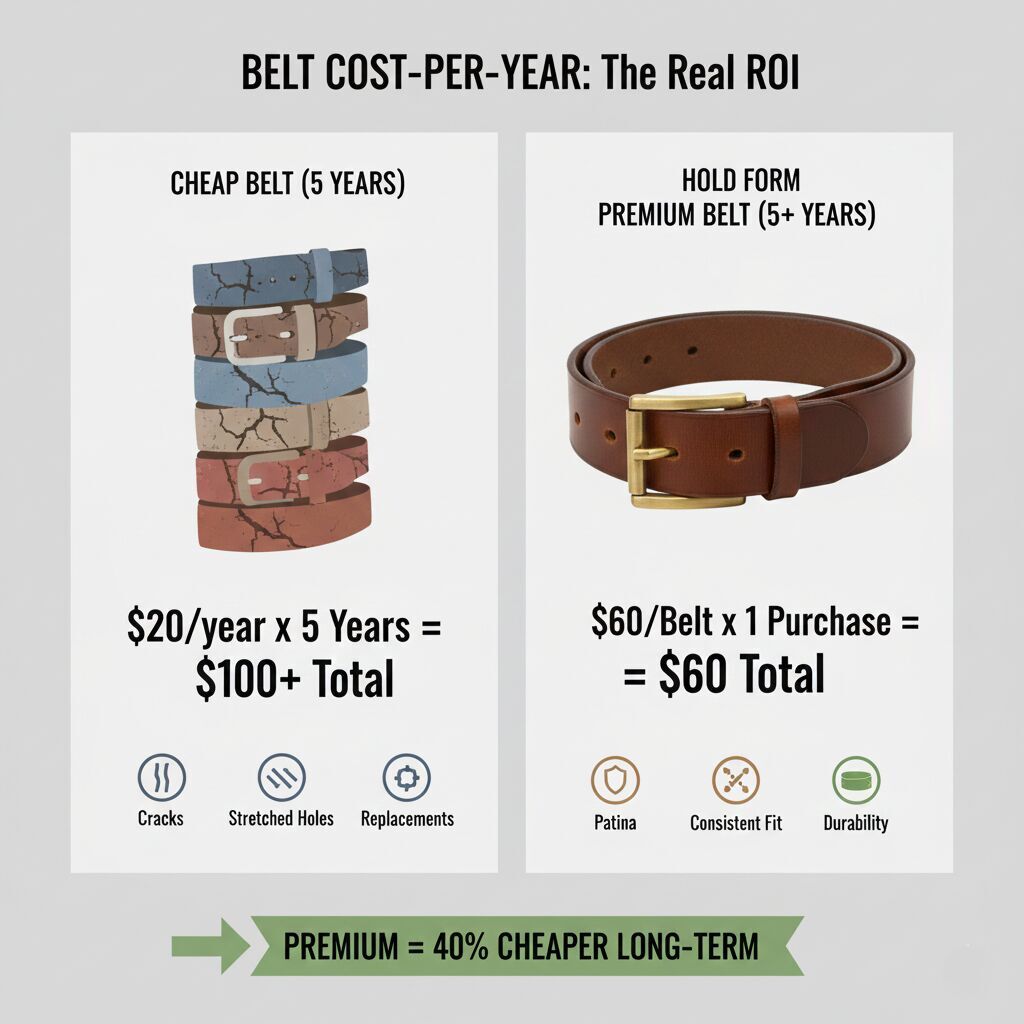
Over the same period:
The difference isn’t cosmetic.
It’s structural.
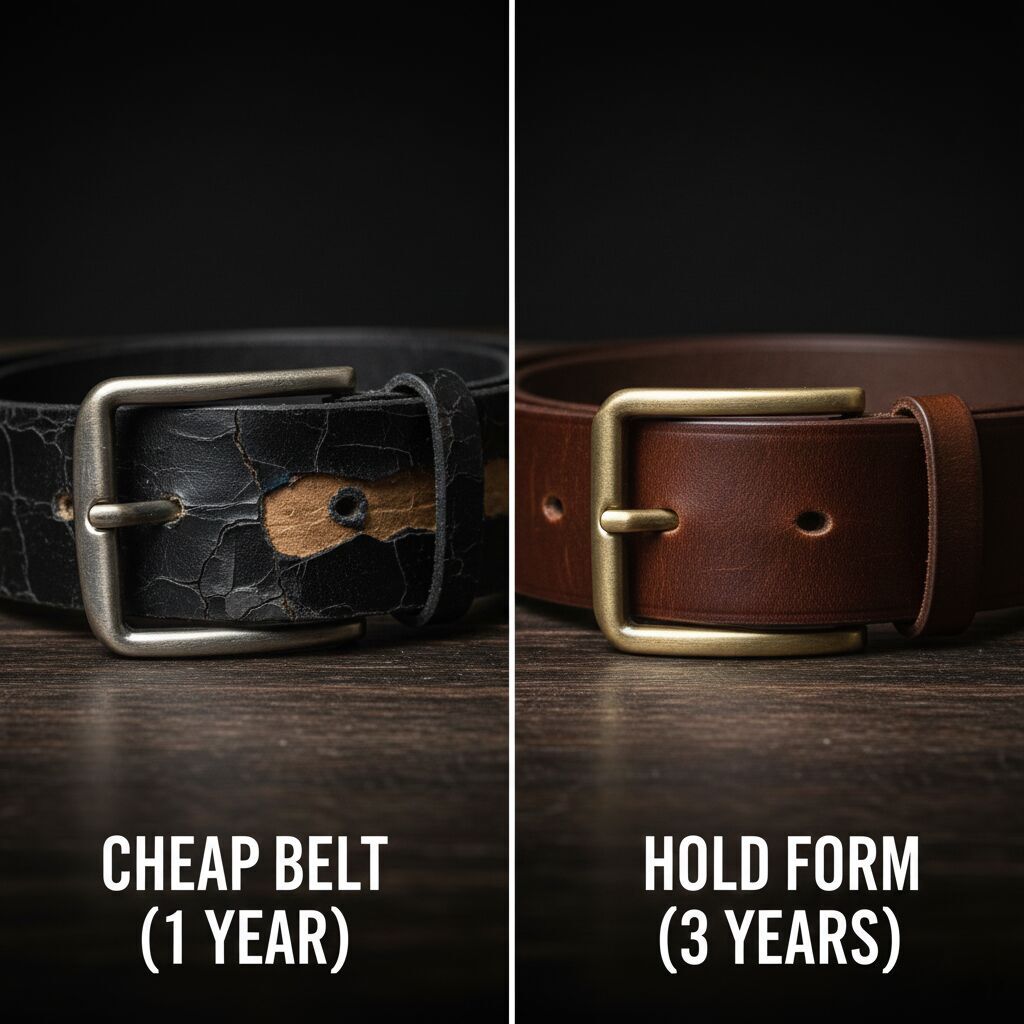
Cost-per-year comparison:
Instead of asking “How much does it cost?”, ask:
How much does it cost per year of use?
That’s the number most people never calculate.
Cost-per-year is the metric professionals use for tools, equipment, and work gear—and belts belong in that category.
Cheap belts feel inexpensive once.
Then quietly become the more expensive option long-term.
A quality belt only delivers long-term value if it fits correctly, which is why knowing how to measure your belt size matters more than most men realize.
Higher-priced belts aren’t expensive by accident.
Cost increases usually come from four places:
This difference is most noticeable in well-constructed men’s leather belts designed for daily wear rather than seasonal use.
Even if you ignore money, cheap belts cost you in other ways:
None of that shows on a price tag.
Cheap belts thrive because they’re:
But that cycle only works if you accept constant replacement as normal.
Most men don’t actively choose cheap belts—they drift into them by default.
Once you experience a belt that doesn’t crack, stretch, or fail early, going back feels irrational.
An expensive belt is worth it if:
If a belt is worn occasionally, price matters less.
For daily wear, durability becomes the deciding factor.
No.
Not all higher-priced belts are built the same—especially when it comes to materials and construction.
Price alone doesn’t guarantee quality.
A belt is only worth more if:
That’s why understanding why belts fail matters before choosing what to buy.
Not all expensive belts are worth it. Many designer brands charge $200+ for a belt made of mediocre “Genuine Leather” just because there is a logo on the buckle.
How to verify quality:
Yes—when they use higher-quality leather, stronger construction, and durable hardware. Cheap belts cost less upfront but often need replacing every year. Over time, a well-made belt usually costs less per year and maintains a better fit and appearance.
With proper materials and construction, several years of regular use is realistic—often five years or more.
Leather density, even stress distribution, reinforced construction, and solid buckles. Durability is structural, not cosmetic. Proper materials matter, but long lifespan also depends on basic belt care and maintenance over time.
Over time, fewer replacements almost always mean lower total cost, better fit, and less frustration.
Ready to buy your “last” belt? Invest in a strap designed for the long haul.
A belt isn’t expensive because it costs more upfront.
It’s expensive when it fails early, fits poorly, and needs replacing again and again.
Once you judge belts by years of use instead of purchase price, the math changes completely.
If you’re evaluating belts based on long-term performance rather than short-term cost, start by understanding how they’re built—and why some are designed to last.
Learn more about Full Grain vs. Top Grain Leather.

Practical belt guides, sizing tips, and exclusive offers — straight to your inbox.

Leave a comment