A leather belt is a good gift only when the sizing problem is solved. Traditional pin-buckle belts make that difficult — fixed hole spacing means the belt either fits or it doesn’t. Trim-to-fit belts remove the guesswork entirely: the recipient cuts to their exact length before first wear. Order 120–125cm, hand it over, done.
This guide covers how to choose the right belt for each type of recipient, what the hardware and leather specifications actually mean, and how to give a belt confidently without knowing the recipient’s waist measurement.
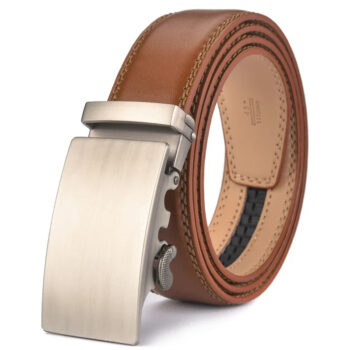
Trim-to-fit construction eliminates the size problem entirely. A trim-to-fit belt — which includes every ratchet belt and most quality leather straps — arrives longer than needed and is cut to exact length at home before first wear. The process takes under two minutes and requires only a pair of scissors. The result is a belt fitted precisely to the recipient’s waist.
The ordering logic when gifting: order 120–125cm as the default. This covers most adult male waist sizes up to approximately 100cm (39″). For someone larger than average, order 130–135cm. If uncertain, order longer — a strap can be trimmed shorter but cannot be extended.
For traditional pin-buckle belts, order two inches (5cm) above the recipient’s trouser size. A person who wears 34″ trousers typically needs a 36″ belt. Less precise than trim-to-fit, but works in most cases.
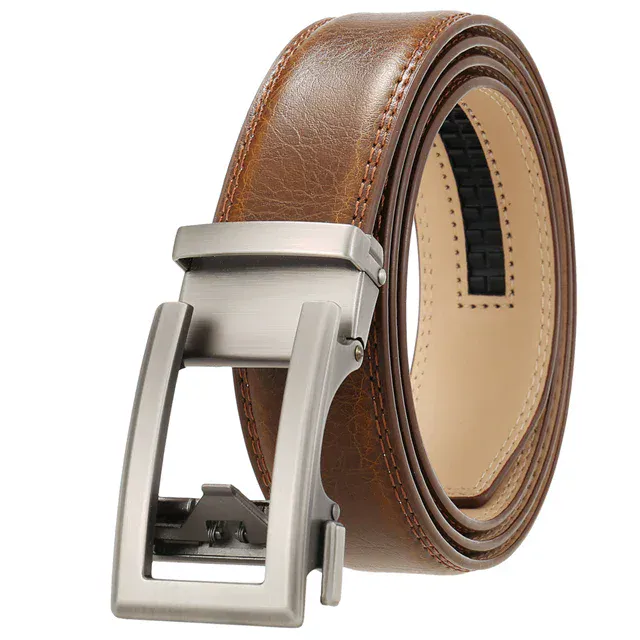
Not every belt is worth giving as a gift. The category spans accessories that look worn within six months to heritage pieces that outlast multiple wardrobes.
Leather grade. Full-grain leather — the outermost layer of the hide with the natural fibre structure intact — develops character over years of wear, holds its shape under tension, and does not peel or delaminate. Top-layer cowhide is adequate for most gift contexts. “Genuine leather” is a broad label that usually tells you less than a full-grain or top-grain specification — it describes the minimum legal standard for real leather rather than a quality level. Bonded leather — compressed fibre composite — is not appropriate for a gift intended to last.
Strap thickness. A dress belt at 30–35mm and 3–3.5mm thickness is correct for suits and formal trousers. A jeans belt at 38–40mm and 4–4.5mm thickness holds flat on denim without rolling. A thin dress belt on someone who wears jeans five days a week, or a thick jeans belt on a professional who wears suits, means the belt sits in a drawer.
Buckle construction. Solid brass and stainless steel hardware outlasts the leather. PVD-coated zinc alloy is adequate for everyday wear — the coating bonds at a molecular level and resists scratching. Electroplated zinc alloy is not suitable for a belt worn daily. If the listing says “alloy buckle” without specifying the coating, assume electroplating.
Construction honesty. A brand that states the specific leather grade, strap thickness, and buckle coating on every product page knows its product and stands behind the specification.
| Recipient | Best width | Best mechanism | Best color |
|---|---|---|---|
| Suits and formal wear | 30–35mm | Pin buckle or ratchet | Black or dark brown |
| Jeans daily | 38–40mm | Ratchet or brass pin | Dark brown |
| Frequent traveler | 35mm | Ratchet | Reversible black/brown |
| Statement style | 38–40mm | Decorative buckle | Depends on hardware |
The priority is buckle restraint and leather quality. A formal belt should complete the suit without competing with it — flat rectangular buckle, brushed or polished silver, smooth black or dark brown strap.
For everyday professional wear, a ratchet mechanism is the more practical choice — it adjusts precisely throughout a full working day without the belt needing to be removed. For strict formal contexts, a classic pin buckle is the more traditional specification.
Hidden-tail construction is worth considering here. The strap end is routed inside the buckle housing rather than through a keeper loop, eliminating the visible flap at the front of the waistband. Under a suit jacket, the result is a completely clean waistline.
[View executive and formal belts — trim-to-fit, 30–35mm →]
The priority is structural integrity. A jeans belt takes more mechanical stress than a dress belt — heavier fabric, more varied activities, higher frequency of removal and replacement. A 4mm full-grain strap at 38–40mm holds flat on denim without rolling. Anything thinner begins curling within months on heavy denim.
Dark brown is the most versatile single color for jeans — it works with blue, black, and grey denim and pairs with both leather shoes and casual footwear. Black is correct for someone who predominantly wears black denim.
For a heritage denim wardrobe: solid brass pin buckle on a heavy full-grain strap. For everyday casual: ratchet mechanism with PVD hardware.
[View 38–40mm full-grain jeans belts — trim-to-fit →]
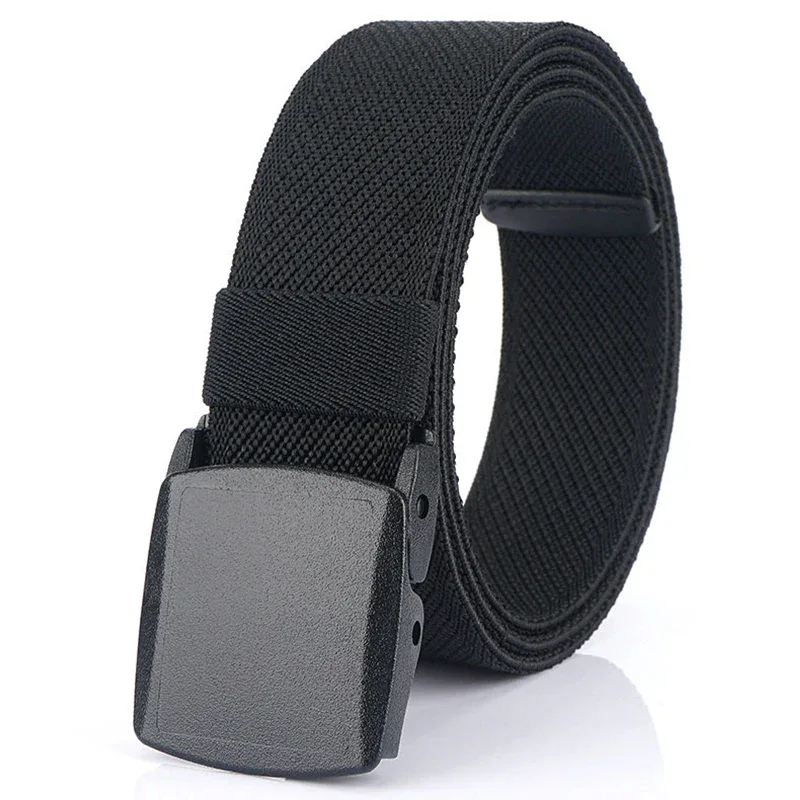
Travel places specific demands on a belt. The ratchet mechanism matters here — waist circumference changes over a long travel day in ways that make fixed-hole spacing uncomfortable by hour six of a flight. Ratchet adjustment takes seconds and can be done without unbuckling.
For a frequent flyer, a metal-free buckle — engineering plastic rather than alloy — passes through airport security without triggering metal detectors, eliminating the need to remove the belt at every checkpoint. This sounds minor until the recipient travels forty or fifty times a year.
A reversible belt provides two color options from one accessory, which suits the minimalist packing approach of experienced travelers. The buckle rotates 180 degrees to reveal the second leather face in under ten seconds.
[View reversible travel belts →]
[View metal-free airport-safe belts →]
The buckle is the gift. A statement belt uses oversized or sculptural hardware — copper or brass animal heads, geometric 3D forms, letter-initial designs — as an intentional outfit focal point. The strap here is secondary to the hardware.
Appropriate for someone with visible personal style, someone who wears heritage or Western denim, or someone who already owns clean everyday belts and would appreciate something with more character. Statement belts are also the strongest option when you know the recipient’s aesthetic but not their exact taste — the category is specific enough to feel considered.
[View heritage and statement belts →]
For trim-to-fit belts: order 120–125cm as the default for most adult men. The recipient trims to fit before first wear using scissors — the process is explained in every product listing and takes under two minutes.
For traditional pin-buckle belts: order two inches above the recipient’s trouser size.
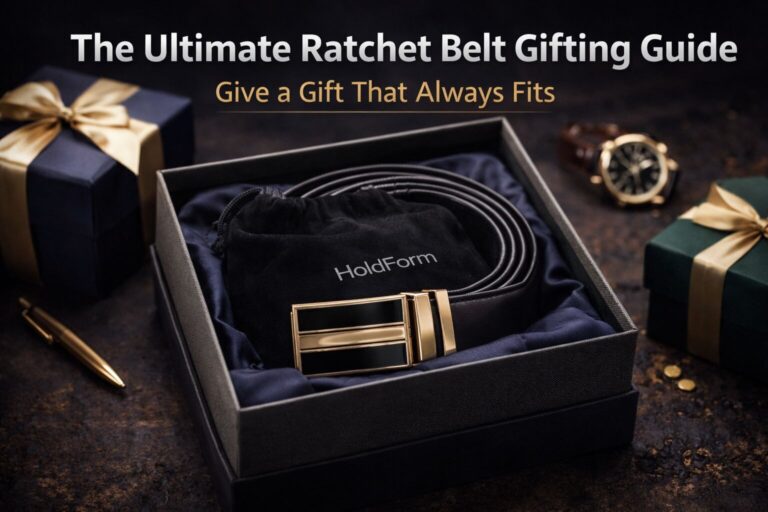
A leather belt in standard packaging presents as a commodity. The same belt in a wooden gift box presents as an object worth receiving. For a gift that will be remembered: request gift packaging where available, or wrap in tissue inside a structured box.
If giving a ratchet belt, include a brief note explaining the trim-to-fit process — most recipients have not owned a ratchet belt before and will appreciate knowing what to do with a strap that arrives longer than expected.
Order a trim-to-fit belt in 120–125cm. The recipient cuts the strap to their exact waist length before first wear using scissors. The process takes under two minutes and produces a precise fit. For traditional pin-buckle belts, order two inches above the recipient’s trouser size.
Full-grain leather at 4mm, 38–40mm width for someone who wears jeans or 30–35mm for formal wear, with PVD-coated or solid brass hardware. The specific choice depends on the recipient’s daily wear context — the specification above works for most casual and smart casual wardrobes.
Yes — ratchet belts are among the most practical gifts in this category because they are trim-to-fit (eliminating the sizing problem) and adjust precisely throughout the day. Order 120–125cm as the default. Include a note explaining the trim-to-fit process.
38–40mm for someone who primarily wears jeans. 30–35mm for someone in suits and formal trousers most days. 35mm is a reasonable middle option if you are genuinely uncertain — it works across both contexts without being optimal for either.
A quality leather belt is worn daily, visible, and useful. A belt correctly specified for the recipient’s wardrobe will be used more consistently than most gift categories. The key is matching the specification to how the recipient actually dresses.
Under $35: generally genuine or bonded leather with electroplated hardware — degrades within months of daily wear. $40–70: genuine cowhide with adequate buckle construction for casual gifting. $60–100: full-grain leather with PVD or solid brass hardware — this is the range where the belt still looks correct in five years. Above $100: premium material sourcing or significant hardware craftsmanship.
Choose the belt by use case first, size second. With trim-to-fit construction, the size problem is already solved.
HoldForm belt specifications — leather grade, strap thickness, and buckle coating — are listed on every product page.
[View trim-to-fit ratchet belts — no size guessing required →] [View heritage full-grain belts for gifting →] [How to size a ratchet belt: trim-to-fit explained →] [Belt buckle materials: what the hardware specification means →]

Practical belt guides, sizing tips, and exclusive offers — straight to your inbox.


Leave a comment