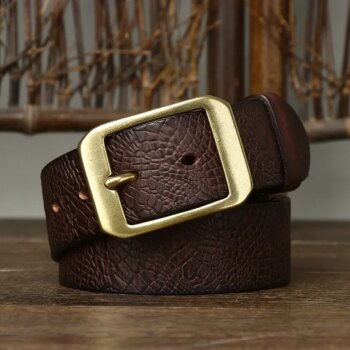
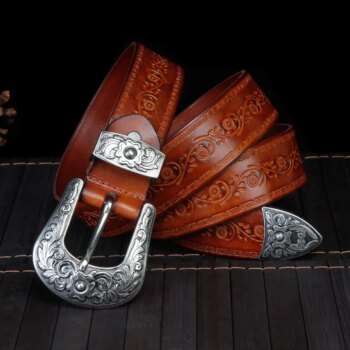
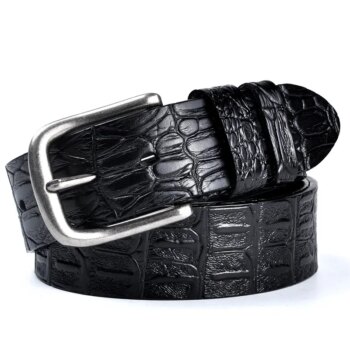
Embossed leather — such as crocodile patterns or Western floral designs — requires a slightly different care approach than smooth leather.
Because the design is pressed into the hide, embossed leather has peaks and valleys where dust, grit, and oils can settle over time. If neglected or overtreated, those details can flatten, darken unevenly, or lose definition.
This guide explains how to care for embossed leather properly so your belt develops a rich patina without losing its texture.
Embossed leather lasts longest when it’s:
Over-care is far more damaging than under-care.
Smooth leather has a flat surface that’s easy to wipe clean.
Embossed leather, on the other hand, has compressed peaks and recessed grooves created under high pressure.
Those grooves:
That’s why embossed leather benefits from precision care, not heavy products.
Dust is the primary enemy of embossed leather. Left alone, fine particles act like sandpaper inside the pattern.
Embossed leather still needs moisture — just not too much.
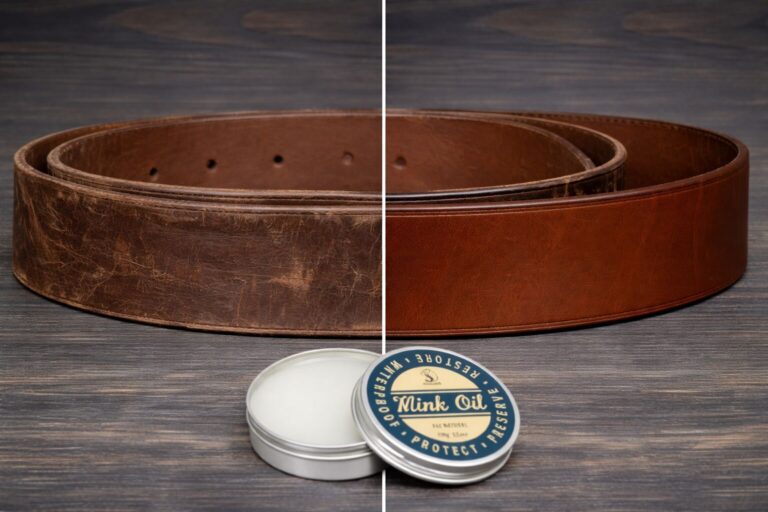
Avoid heavy oils or animal fats (such as mink oil). These:
Frequency: Once every 6 months (or less in dry climates)
HoldForm embossed belts are cut from thick 4–5mm cowhide, which means they will feel stiff when new.
That kind of stress can cause micro-cracking along the embossed peaks.
Proper break-in starts with the right fit. If you’re unsure about your size, see our HoldForm Belt Sizing Guide.
Quality hardware lasts decades — but it still benefits from minimal care.
Brass naturally develops patina over time. If you prefer the original matte finish:
For polished brass: a soft dry cloth removes fingerprints and surface oils. For a deeper clean once or twice a year, apply a small amount of dedicated brass polish with a soft cloth, buff off, and dry thoroughly. Keep any cleaning product away from the leather strap — apply to the buckle face only.
Avoid harsh metal polishes — they’re unnecessary and abrasive.
We use only the highest grade materials. Learn why we choose these metals in Solid Brass vs. Zinc: Why Hardware Quality Matters.
If rolling is necessary:
| Action | Frequency | Benefit |
|---|---|---|
| Dry brushing | Monthly | Removes grit from embossed grooves |
| Light conditioning | Every 6 months | Prevents cracking without flattening texture |
| Hardware wipe | As needed | Removes skin oils and residue |
| Rotational rest | Weekly | Allows leather fibers to recover |
If an embossed belt shows:
It’s usually a sign of bonded leather or over-conditioning, not normal wear.
Quality embossed leather should age gracefully — not disintegrate.
Embossed leather rewards restraint.
Brush it gently.
Condition it lightly.
Wear it regularly.
If treated correctly, an embossed belt won’t just last — it will sharpen in character while keeping its original depth and detail.
Light brushing once a month is sufficient. Avoid frequent wet cleaning.
Only if it’s lightweight. Heavy oils can clog grooves and flatten the pattern.
Conditioner or oils may have settled unevenly in the recessed areas of the pattern.
No. When made from solid cowhide, embossed leather is equally durable — it just requires more precise care.
Yes, if forced or bent aggressively. Natural break-in through wear is safest.

Practical belt guides, sizing tips, and exclusive offers — straight to your inbox.

Leave a comment