Belt buckle rash is almost always caused by nickel in the hardware, not the leather. Nickel contact dermatitis — a Type IV hypersensitivity reaction — is triggered when nickel salts leach through sweat contact onto the skin. The rash appears at the exact point where the buckle frame contacts the body: a patch of redness, itching, or blistering at the lower abdomen or hip, typically appearing after a few hours of wear.
The fix is not a cream or a fabric barrier. It is switching to buckle hardware that does not contain nickel — solid brass, nickel-free grade zinc alloy, or titanium. This guide explains which materials are genuinely nickel-free and how to verify a buckle’s specification before buying.
Nickel is popular with manufacturers for one reason: it’s cheap.
It’s commonly added to low-grade alloys or used as a shiny surface plating to imitate stainless steel or silver. The problem is that once plating wears down—and it always does—nickel leaches onto your skin when exposed to sweat.
Medical sources such as the Mayo Clinic note that nickel allergy is lifelong. Once sensitized, even small exposure can trigger irritation.
That’s why “nickel-plated” or vaguely labeled “metal” buckles are risky—even when marketed as hypoallergenic.
You shouldn’t have to compromise style to avoid a rash. The solution isn’t coatings or gimmicks—it’s material choice.
We focus on buckle materials that are naturally nickel-free from the core, not just on the surface.
For classic pin-buckle designs, solid brass is the correct nickel-free specification. Brass is an alloy of copper and zinc — it does not require nickel for strength or colour. A solid brass buckle has no surface plating to fail, no base metal to expose. If the surface is scratched, the exposed material is the same brass throughout. It develops a natural patina over time rather than degrading.
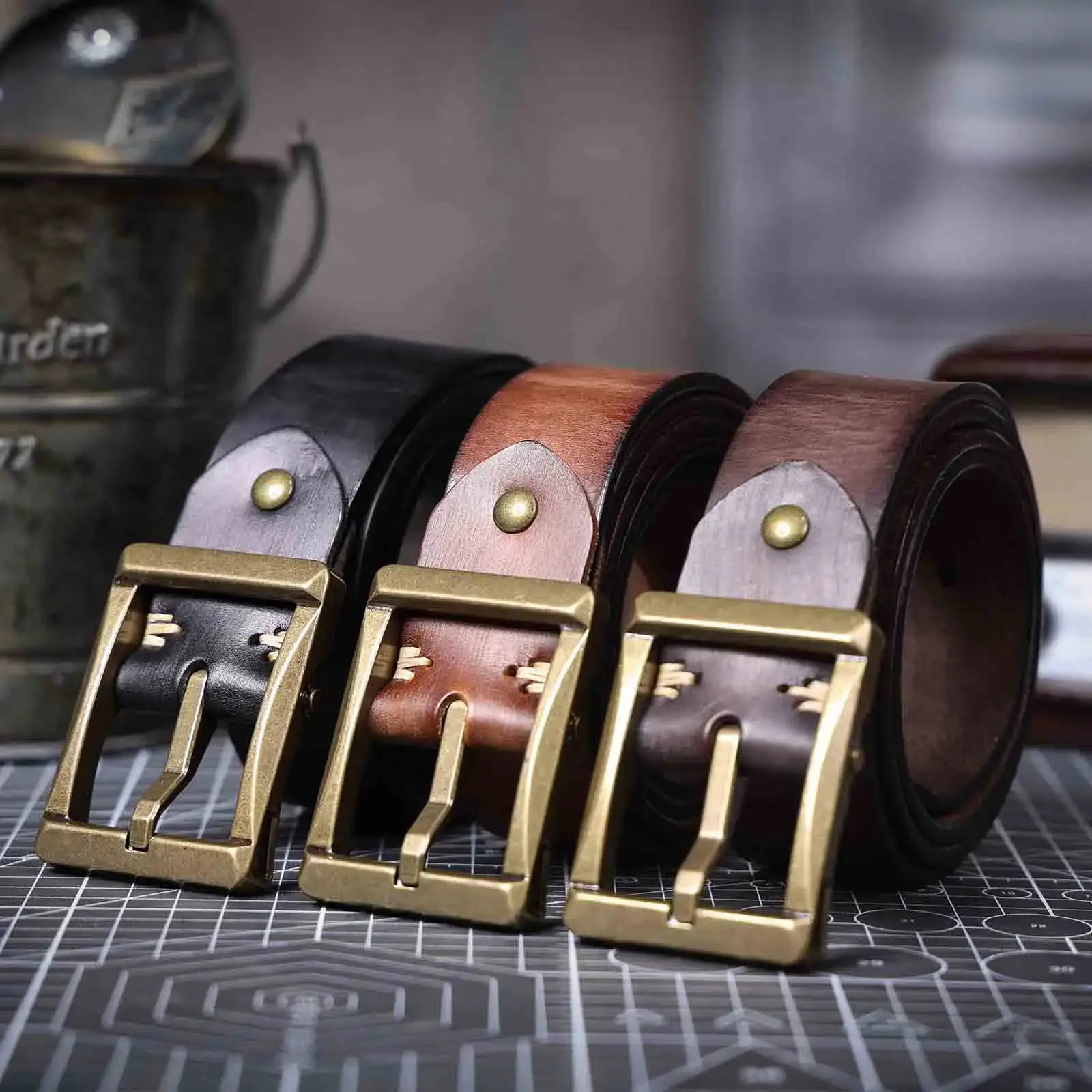
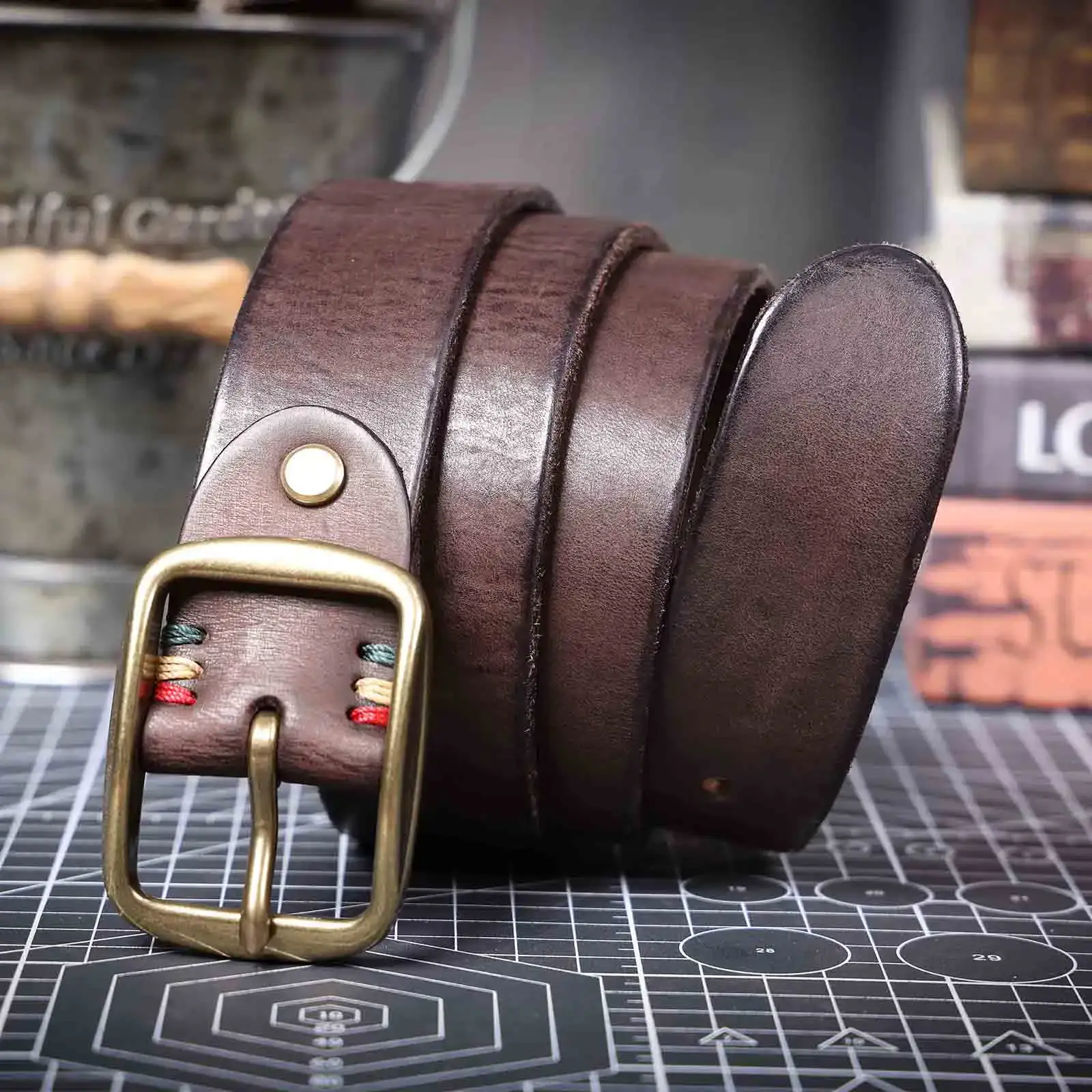
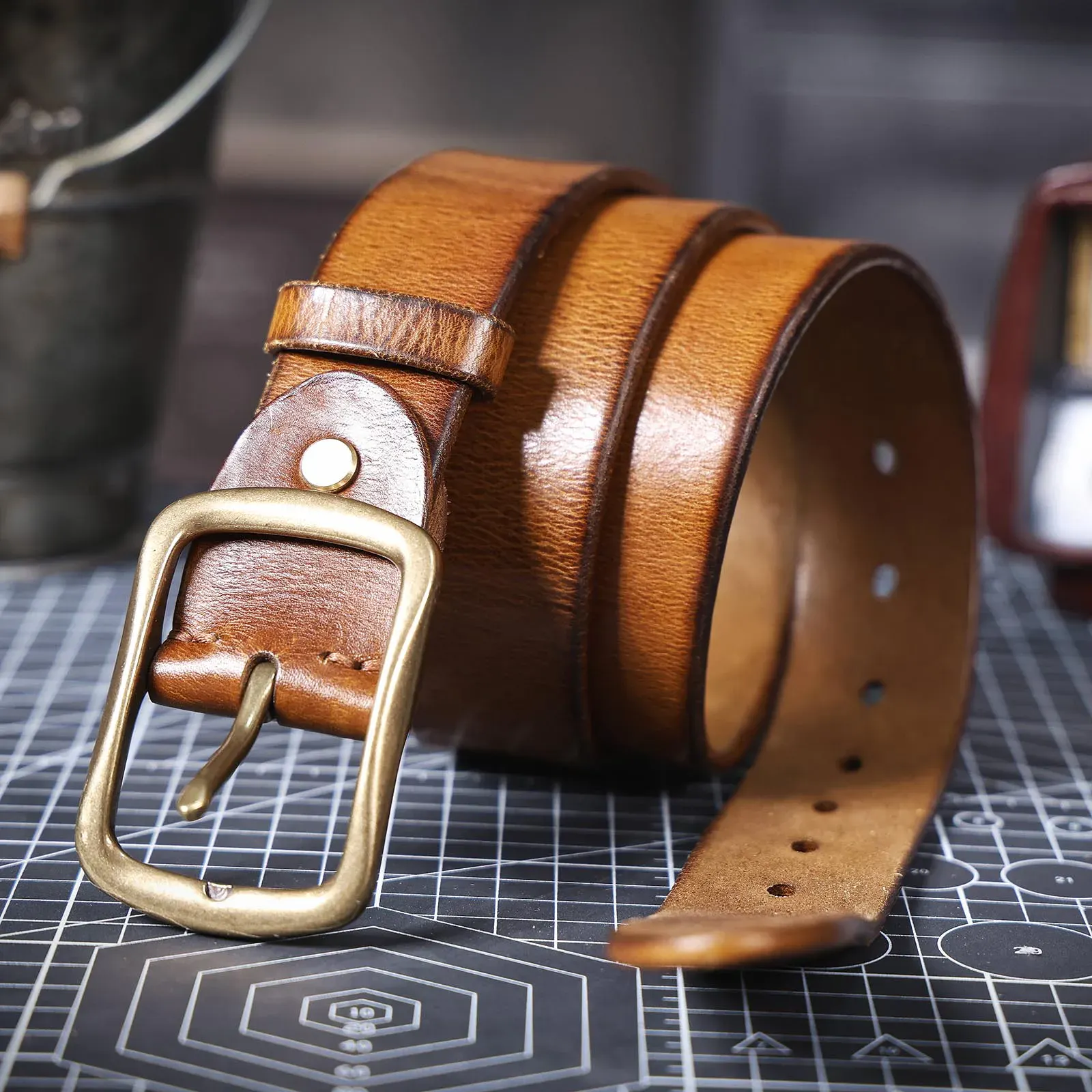
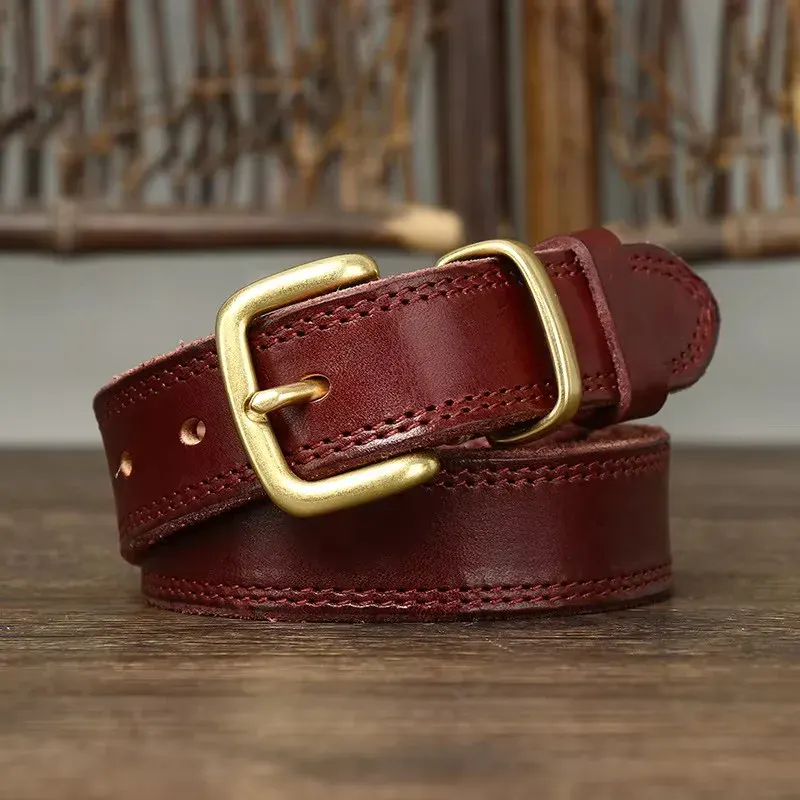
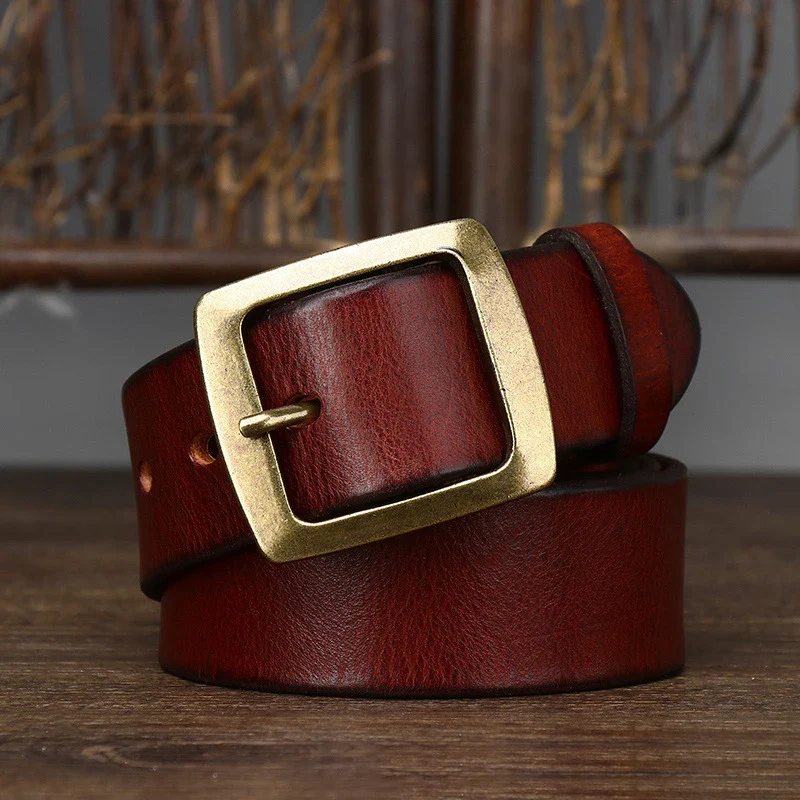
Why they work:
These are ideal for men who value durability, tradition, and zero skin irritation.
For ratchet belts and contemporary designs, we use high-density zinc alloy and pure titanium.
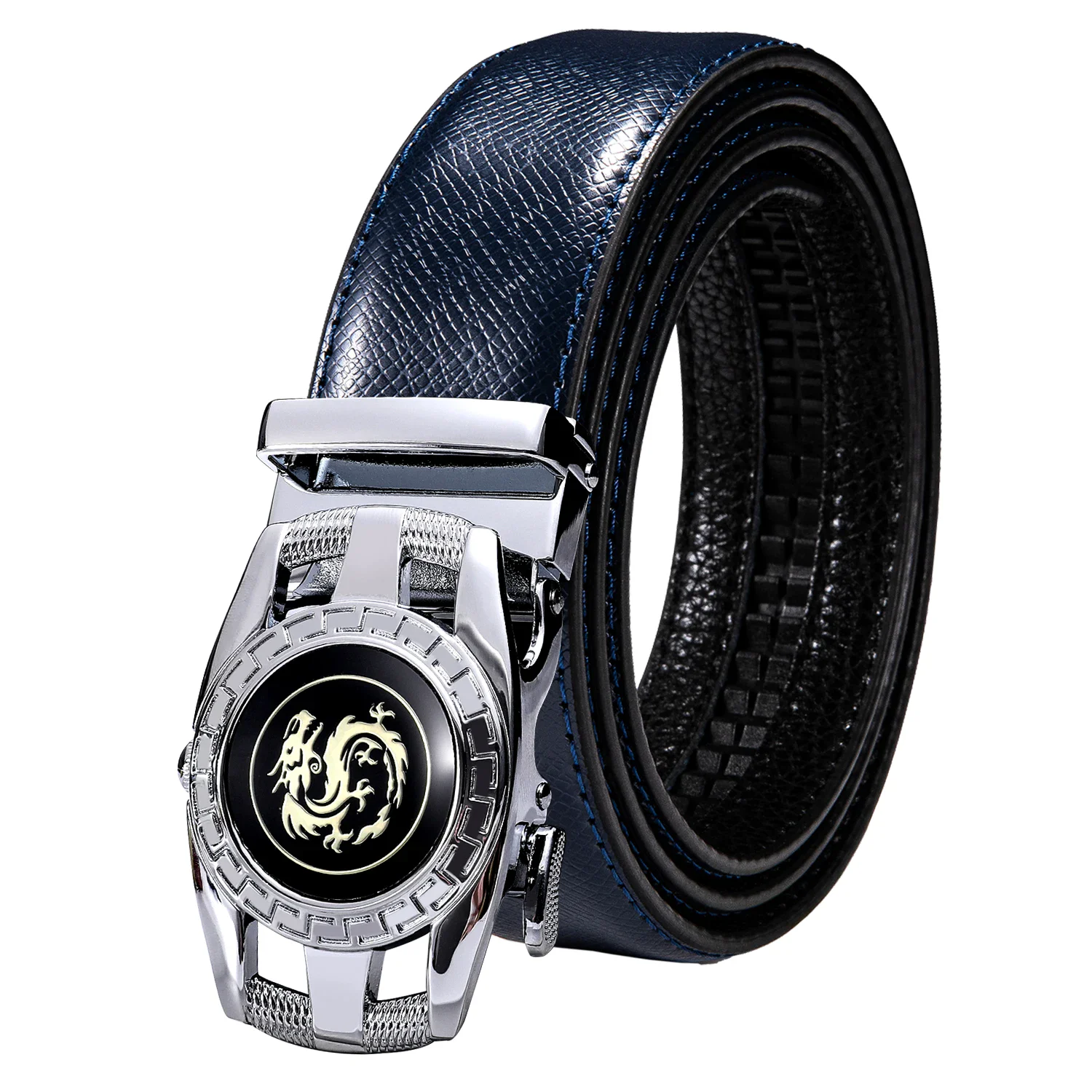
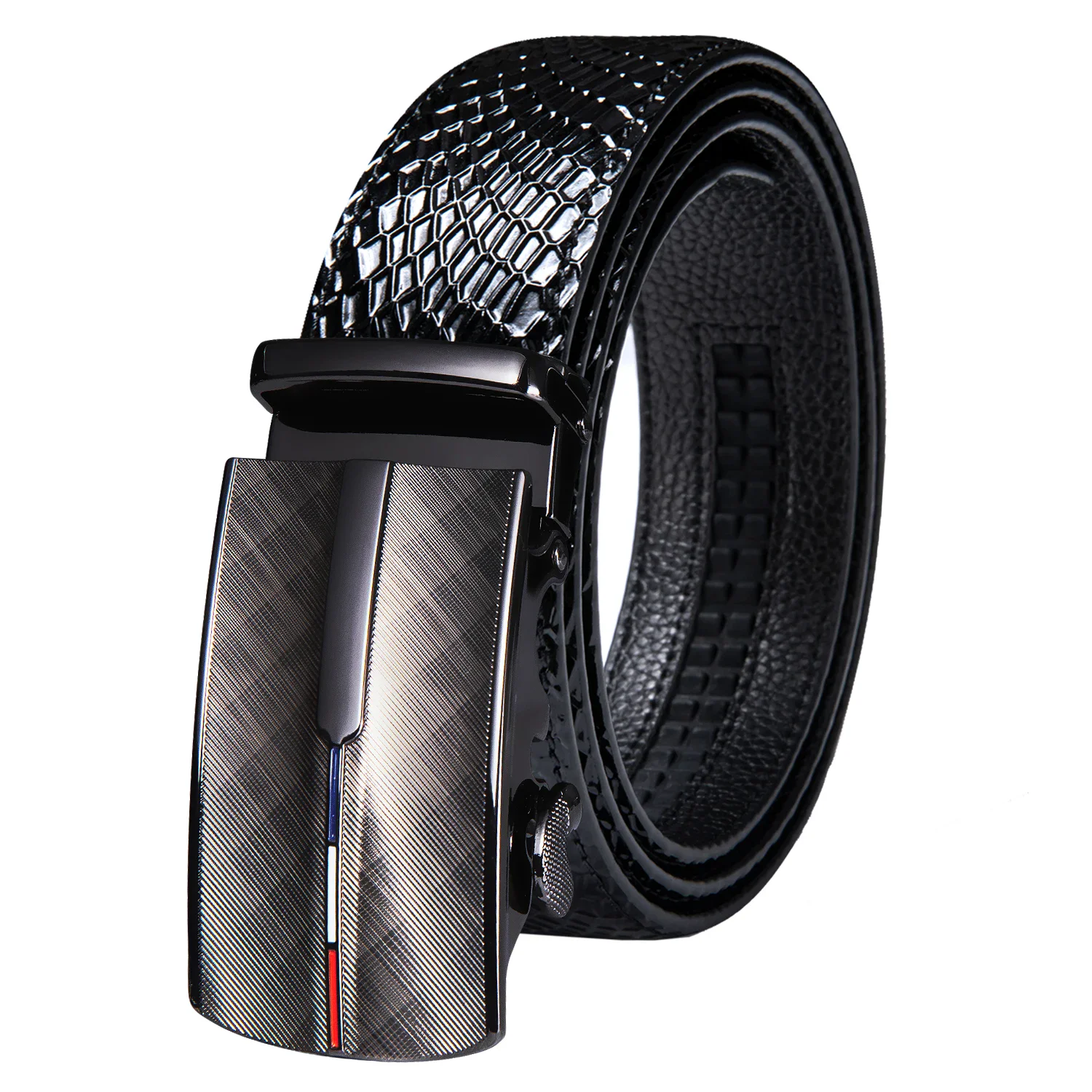
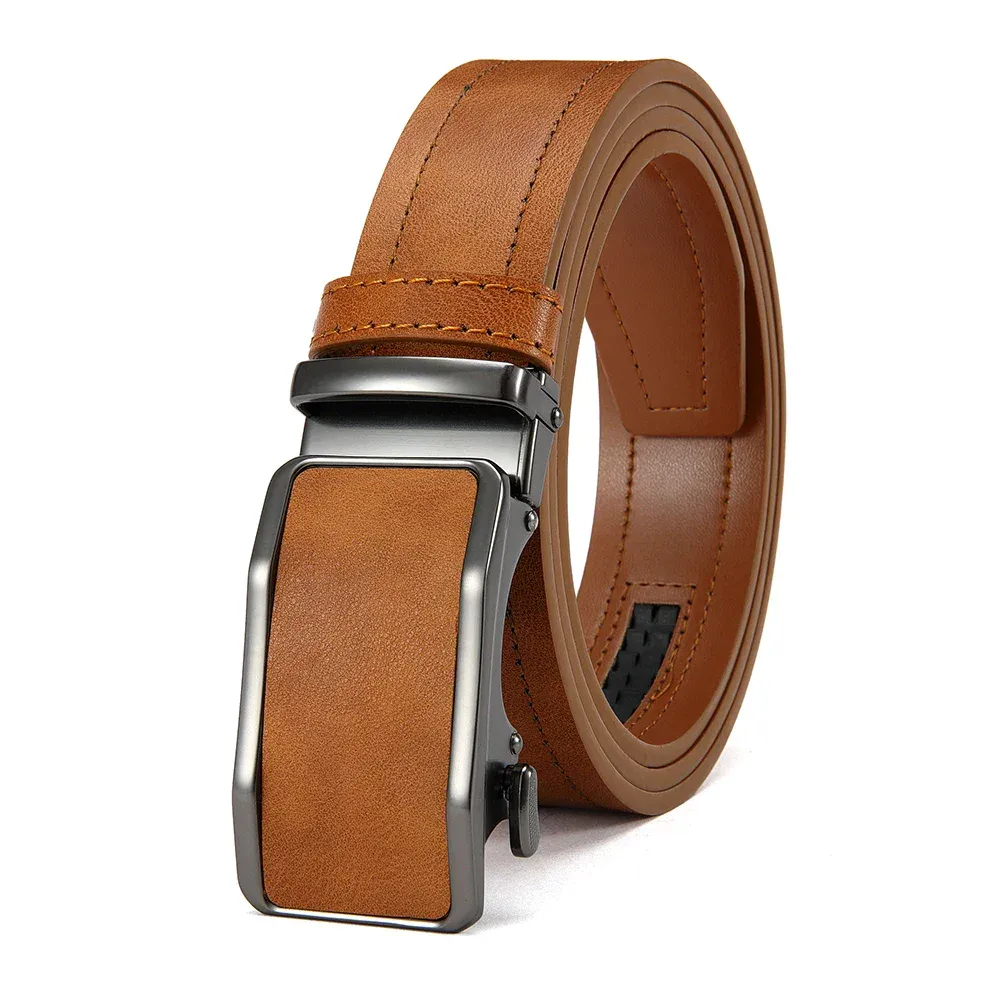
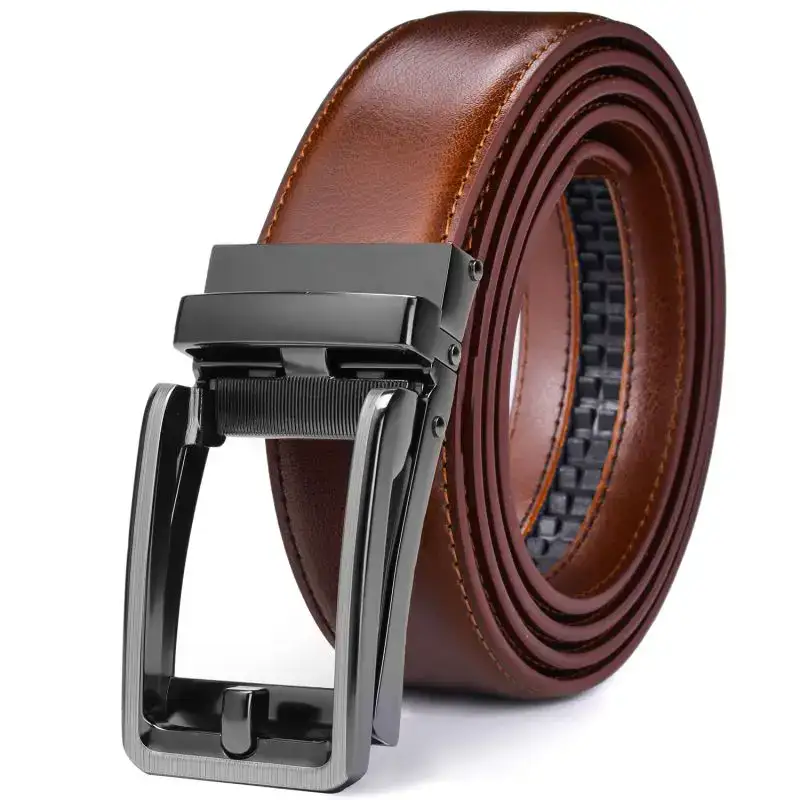
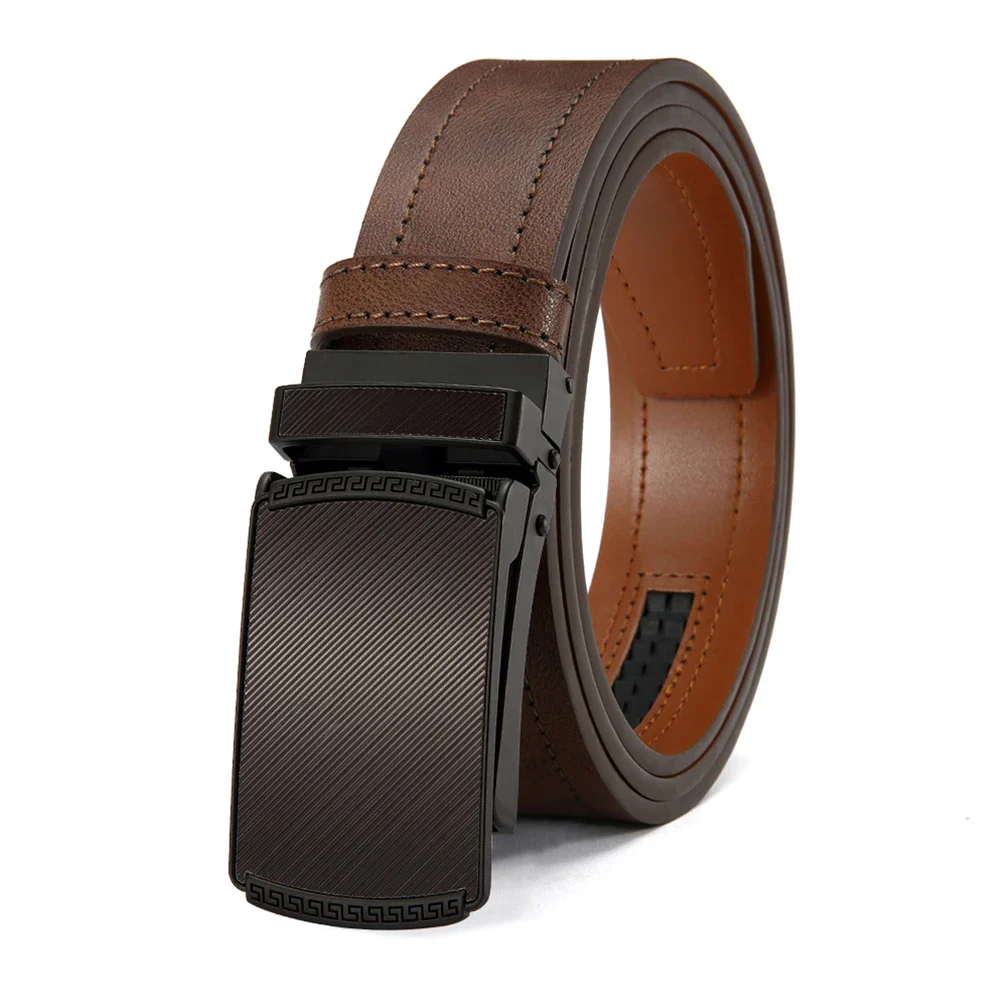
Titanium is the gold standard for extreme sensitivities.
| Material | Skin safety | Best use |
|---|---|---|
| Solid brass | Naturally nickel-free — no coating to fail | Heritage, jeans, workwear |
| Zinc alloy (nickel-free grade) | Safe when correctly specified — verify with supplier | Everyday ratchet belts |
| Pure titanium | Completely inert — highest safety for severe sensitivity | Any context, extreme sensitivity |
| Nickel-plated alloy | Unsafe once plating wears avoid for daily wear | — |
Avoid “nickel-plated” or “polished alloy” unless nickel-free is explicitly stated.
Ratchet belts have two specific advantages for buyers with nickel sensitivity.
First, the leather face is unperforated — there are no holes that position the buckle frame against the skin at a fixed point. On a pin-buckle belt, the prong passes through a hole and the buckle frame sits against the body at that hole location. If the buckle frame contains nickel, the contact is consistent and concentrated. On a ratchet belt, the adjustment mechanism is inside the buckle housing and the leather face is continuous — the contact between buckle hardware and skin is reduced.
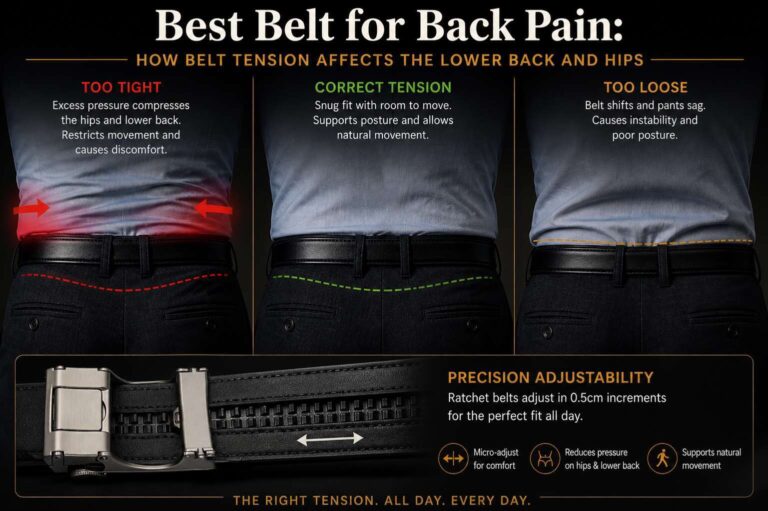
Second, precise micro-adjustment prevents the overtightening that increases buckle-to-skin pressure. A belt set at exactly the correct tension sits against the body rather than pressing into it. Fixed-hole belts that are slightly too tight — because the correct tension falls between holes — create more sustained pressure than a ratchet belt set precisely.
The only permanent solution is nickel-free hardware.
Solid brass is naturally nickel-free. High-quality solid brass buckles do not require nickel for strength or appearance, making them a safe option for people with nickel allergies. Problems only occur with nickel-plated brass, not solid brass.
Belt buckles are commonly made from:
1. Zinc alloy
2. Brass
3. Stainless steel
4. Aluminum
5. Titanium
Lower-cost buckles often contain nickel-plated alloys, which can cause skin irritation. Nickel-free materials like solid brass, zinc alloy (nickel-free grade), and titanium are safest for sensitive skin.
Yes. High-density zinc alloy is excellent for belt buckles. It is strong, lightweight, corrosion-resistant, and can be manufactured without nickel. When properly finished, zinc alloy buckles are durable, stylish, and skin-safe.
Neither is universally “better”—they serve different needs:
1. Brass: Classic, heavier, develops patina, ideal for heritage pin buckles
2. Zinc alloy: Lightweight, precise, modern, ideal for ratchet belt mechanisms
Both are excellent nickel-free options when made correctly.
Pure titanium is 100% nickel-free and completely inert. It does not react with sweat or skin and is commonly used in medical implants. It’s the safest option for people with severe metal sensitivities.
In most cases, the allergy is caused by nickel, not leather. Nickel reacts with sweat and friction, releasing nickel salts that irritate the skin and cause redness, itching, or blistering.
Belt buckles made from solid brass, nickel-free zinc alloy, stainless steel (true grade), or titanium are least likely to irritate skin. Avoid nickel-plated or unlabeled metal buckles.
A belt rash isn’t “normal.”
It’s your skin telling you the hardware is wrong.
Whether you choose a modern ratchet buckle or a classic heritage pin, the fix is the same: nickel-free materials engineered to last.
Comfort should be invisible.
Your belt should be too.
Shop Nickel-Free Ratchet Belts
Shop Solid Brass Heritage Belts

Practical belt guides, sizing tips, and exclusive offers — straight to your inbox.

Leave a comment