Most belt guides frame this as a style decision. It isn’t — or at least, that’s not where the decision should start.
Ratchet buckles and pin buckles are different mechanical systems. They distribute load differently, fail at different points, and suit different use cases for structural reasons that have nothing to do with what you’re wearing them with. Once you understand the mechanics, the style application follows naturally.
This covers how each system works, where each one fails, and what that means for choosing between them.
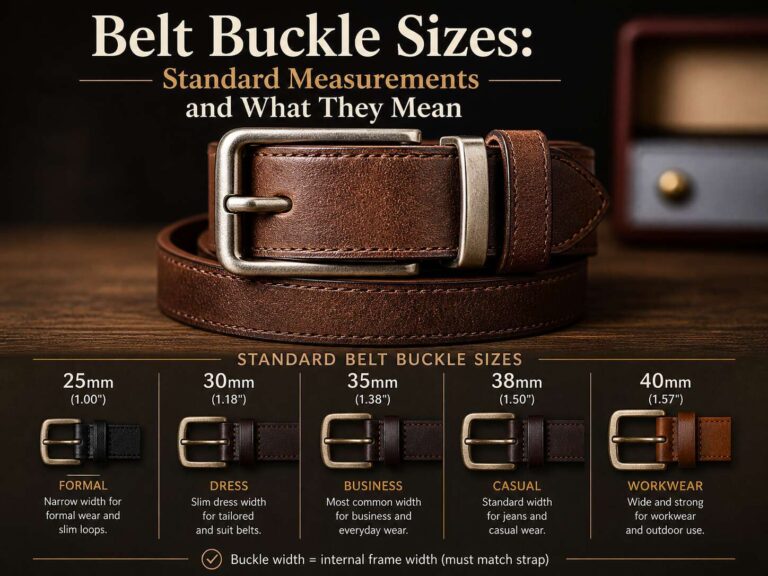
A pin buckle is one of the oldest functional fasteners in use. The mechanism has three components: the frame, the bar the leather loops around, and the pin that passes through a hole in the leather and seats against the frame.
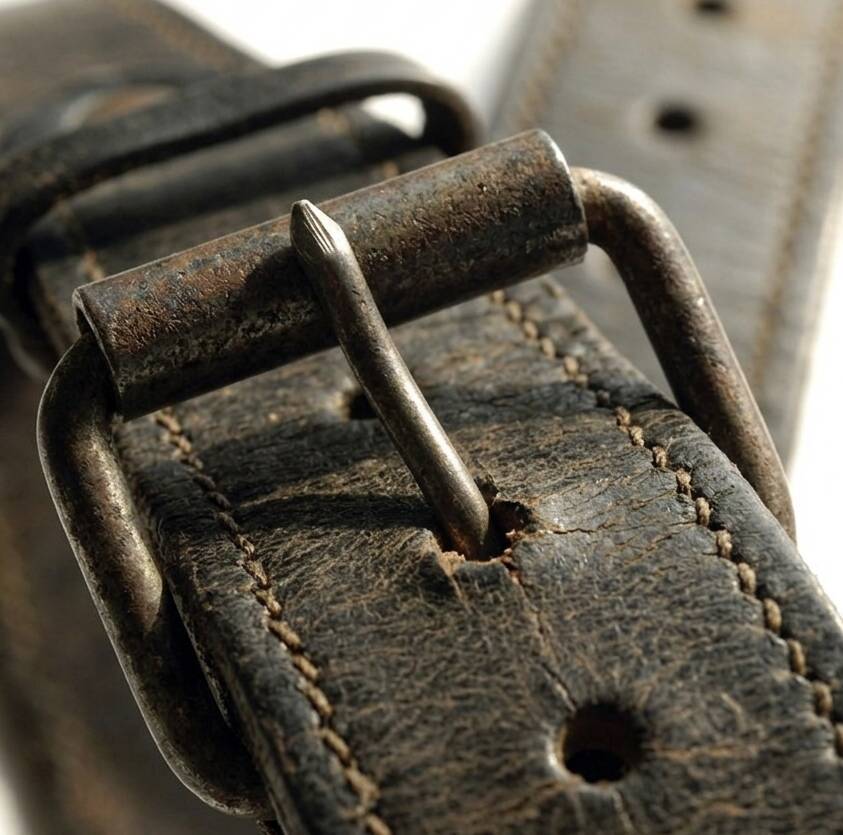
Under belt tension, the pin bears the full load of keeping the belt closed. The leather at the hole bears the compressive load of the pin against it. The frame bears the tensile load of the strap pulling against the bar.
That’s it. No springs, no tracks, no moving parts beyond the pin hinging on the frame.
Where the load goes: All adjustment stress concentrates at a single point — the hole in use. Every time the pin seats, it compresses and slightly enlarges the leather fibers around that hole. Over months of daily wear, the hole stretches outward in the direction of belt tension. On belts worn for 8–10 hours a day, this is visible within 6–12 months on thinner leather (under 3.5mm). On full-grain leather at 4mm and above, it takes longer but still occurs — the fiber density slows the process, it doesn’t stop it.
The practical consequence: the hole that fits you today fits you slightly differently in a year. Most people compensate by moving to the next hole, which is now 2.5cm away from where they actually want to be.
Where pin buckles fail:
Where pin buckles hold up: With almost no moving parts, a well-made pin buckle in solid brass or steel is effectively indestructible at the mechanism level. The leather fails long before the buckle does. For intermittent use — weekends, casual wear, belts that aren’t worn daily — pin buckles outlast their leather straps without issue.
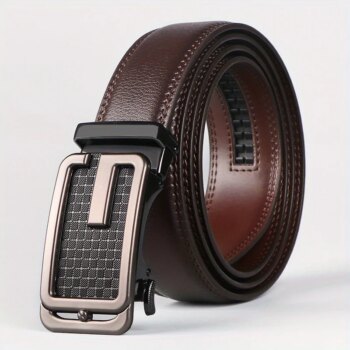
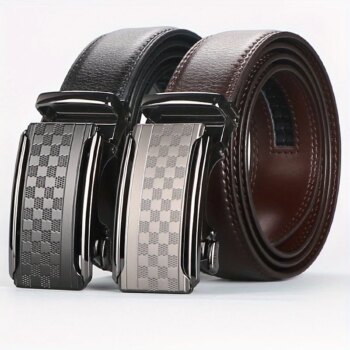
A ratchet buckle replaces the hole-and-pin system with a track-and-pawl mechanism. The leather strap has a series of teeth cut or molded into its inner face — typically spaced 0.5cm apart. The buckle housing contains a spring-loaded pawl: a small lever that engages the teeth and holds the belt at whatever position it’s set to.
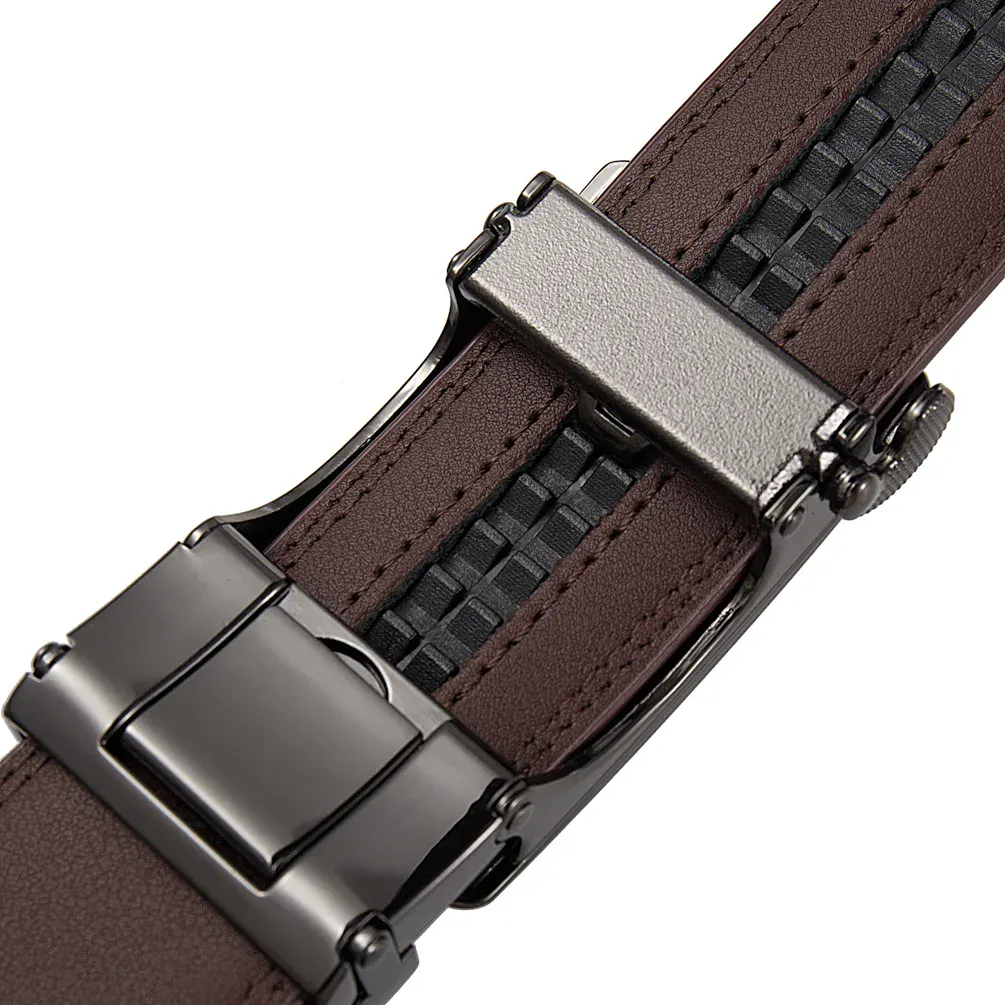
To tighten, you feed the strap through the buckle and the pawl clicks into successive teeth. To release, a lever on the buckle disengages the pawl, allowing the strap to slide free.
Where the load goes: Instead of concentrating stress at one hole, the ratchet mechanism distributes engagement load across whichever tooth the pawl is seated in — and because the pawl engages the full width of the tooth rather than compressing leather fibers around a hole, the stress footprint per adjustment cycle is smaller. More importantly, adjustment doesn’t require the leather to deform. The track teeth are a fixed geometry; the leather around them doesn’t stretch or compress to accommodate the buckle.
This is the structural reason ratchet belts maintain a consistent fit over time where pin belts drift. It’s not about comfort preference — it’s about what each mechanism does to the leather at the adjustment point.
Where ratchet mechanisms fail:
For a detailed breakdown of ratchet mechanism construction and failure modes, see our [full guide to how ratchet belt mechanisms work →]
| Pin Buckle | Ratchet Buckle | |
|---|---|---|
| Adjustment increment | ~2.5cm (one hole to next) | ~0.5cm (one tooth to next) |
| Stress distribution | Concentrated at single hole | Distributed across engaged tooth |
| Effect on leather over time | Progressive hole stretch at wear point | No leather deformation at adjustment point |
| Moving parts | Pin hinge only | Pawl, spring, release lever |
| Primary failure mode | Hole stretch and tear | Pawl spring fatigue or housing flex |
| Mechanism durability | Extremely high (solid metal, no springs) | High when well-made; variable when not |
| Adjustment reversibility | Fixed holes — can’t adjust between them | Continuous within track range |
| Track requirement | Standard flat strap | Toothed track cut into strap |
The case for ratchet — daily wear, heavier carry, fit precision:
If you wear a belt five or more days a week, the cumulative stress on a pin buckle’s wear hole is significant. At that frequency, hole stretch is a matter of when, not if, on most leather thicknesses. A ratchet mechanism eliminates that failure mode entirely.
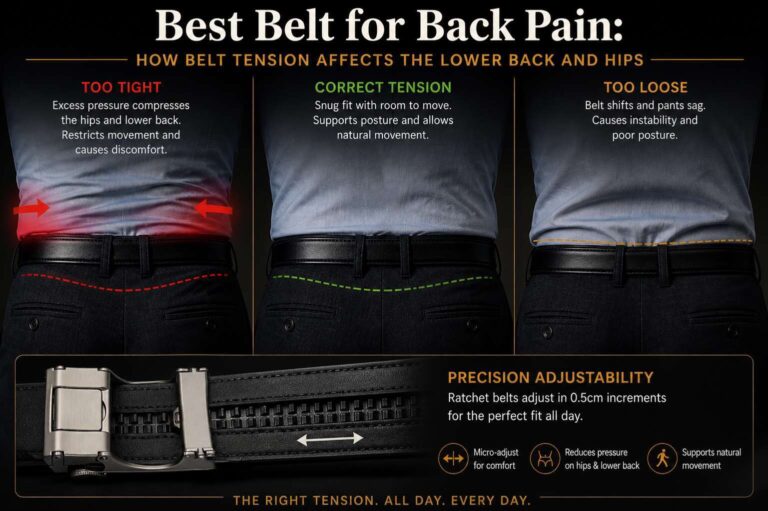
For carry use — where belt tension varies with holster position, movement, and load weight — ratchet adjustment also means you can dial fit precisely rather than choosing between too tight and too loose across a 2.5cm gap. The 0.5cm increment matters when you’re trying to maintain consistent holster retention pressure through a full day.
For a technical breakdown of how belt thickness affects carry performance, see our [guide to 4mm vs 5mm belt thickness →]
The case for pin buckles — intermittent use, rugged environments, mechanical simplicity:
A pin buckle with no moving parts has no spring to fatigue, no pawl to misalign, no track to delaminate. In environments where the buckle takes physical abuse — construction, fieldwork, heavy outdoor use — the absence of a precision mechanism is a practical advantage. There’s nothing to break that isn’t visible and obvious.
For belts worn 2–3 times a week at consistent sizing, the hole stretch problem is slow enough to be irrelevant for years. A quality pin buckle on full-grain leather at that frequency outlasts most of the situations it’s used in.
The overlap case:
Some buyers want the fit precision of a ratchet mechanism with the visual weight of a traditional buckle frame. Hidden-tail ratchet designs address the aesthetic side of this — the mechanism is internal, the profile is clean, and the visual result reads closer to a traditional belt than a visible-track ratchet system.
For a full explanation of how hidden-tail mechanisms work and where they’re the better choice, see our [guide to hidden-tail belt construction →]
For either buckle type, the specs that determine whether it holds up are rarely the ones featured in product descriptions.
For pin buckles:
For ratchet buckles:
For a detailed breakdown of what belt construction specs actually mean and how to evaluate them before purchase, see our [belt construction guide →]
A belt that doesn’t disclose housing material, leather thickness, and track construction type is missing the three specs that most directly predict how long it holds up. That omission is informative.
No. A ratchet buckle requires a toothed track cut into the inner face of the leather. A flat pin-buckle strap has no track for the pawl to engage. The two systems are not interchangeable — the strap and buckle are designed as a matched system.
At equivalent construction quality, no. A well-made ratchet mechanism with appropriate spring steel and a brass or steel housing outlasts the leather strap it’s mounted on. The failure cases for ratchet mechanisms — spring fatigue, housing flex, track delamination — are quality-dependent, not inherent to the design. A cheap ratchet buckle fails faster than a quality pin buckle. A quality ratchet buckle outlasts a cheap pin buckle. Construction quality determines longevity more than mechanism type.
Three possible causes, in order of likelihood: pawl spring fatigue (the spring is no longer holding the pawl firmly against the track), tooth stripping (the track teeth have worn down at the engagement face), or housing flex (the buckle housing is deforming under tension and misaligning the pawl). The first two are end-of-life failure modes. The third is a design quality issue that gets worse over time. For a full breakdown of ratchet mechanism failure diagnosis, see our [guide to how ratchet belt mechanisms work →]
4mm is the practical minimum for a ratchet track cut directly into the leather. Below that, tooth depth is insufficient to resist stripping under daily load, and the leather around the track is too thin to prevent deformation. Belts marketed as ratchet designs at 2–3mm total thickness are almost always using a bonded track insert rather than integrated teeth — which is a different construction with different failure characteristics.
In terms of mechanism simplicity and resistance to mechanical failure, yes — a solid brass or steel pin buckle with no moving parts is harder to break at the buckle itself than any ratchet mechanism. But “stronger” applied to the full belt system is more complicated: a pin buckle on thin leather fails at the hole long before the buckle fails. The belt as a system is only as strong as its weakest component, and for pin belts in daily use, that’s consistently the leather at the wear hole, not the buckle.
HoldForm manufactures both ratchet and pin buckle belts to declared construction specifications — leather grade, thickness, housing material, and track construction listed on every product page.

Practical belt guides, sizing tips, and exclusive offers — straight to your inbox.

Leave a comment