Most belt colour decisions go wrong not because someone chose the wrong colour, but because they applied the right rule in the wrong way. Match belt to shoes is correct. But it’s a starting point, not a complete system — and understanding why the rule works makes it easier to apply it to the specific outfit combinations that don’t fit neatly into a two-option answer.
This covers the logic behind belt colour matching, how it applies to specific outfit scenarios, and where construction quality determines whether the colour choice registers the way it’s intended to.
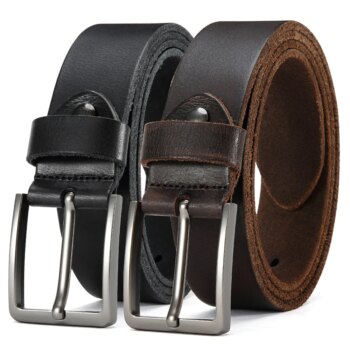
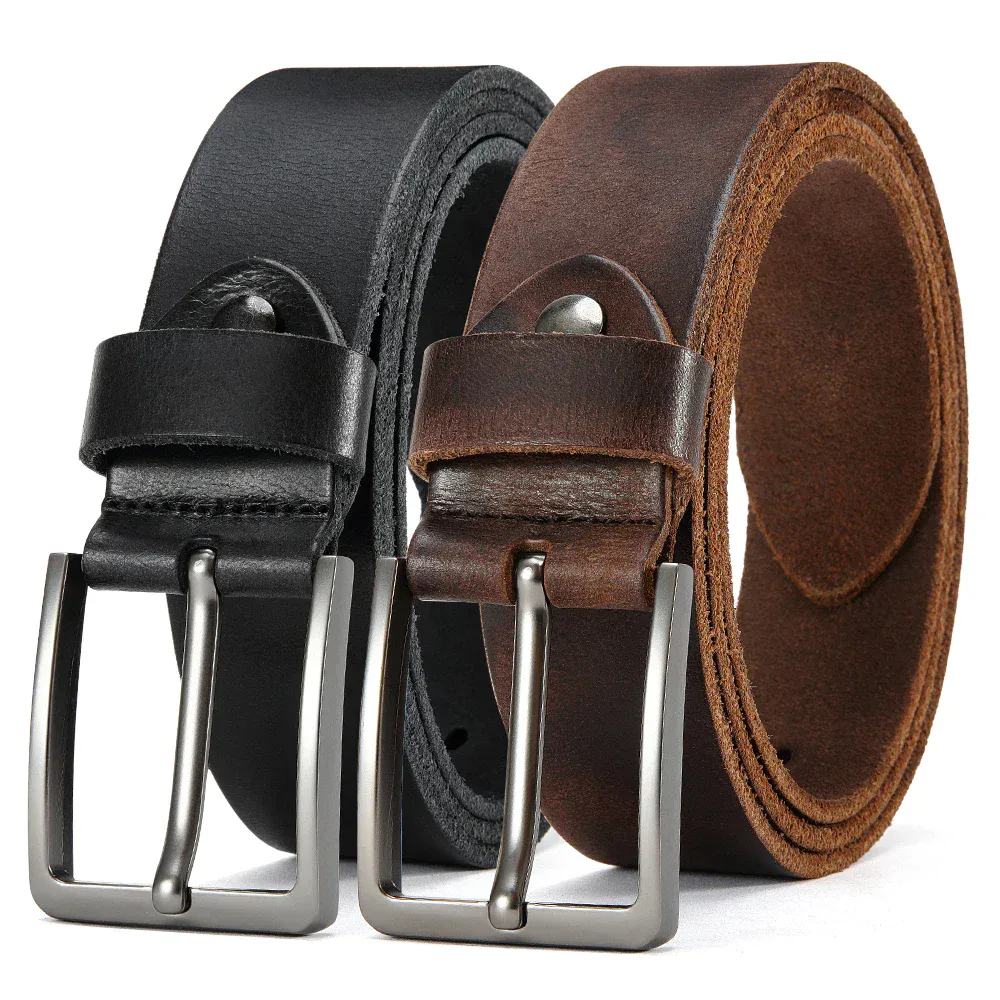
Both colors are covered in our executive belt range.
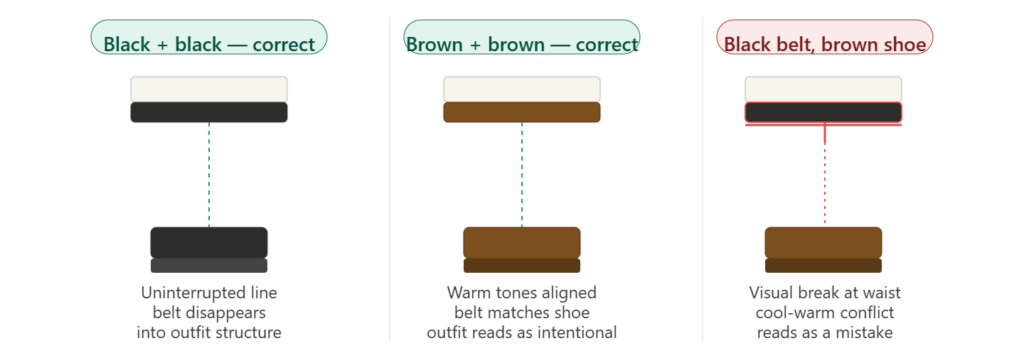
The reason you match belt to shoes isn’t arbitrary convention. It’s visual logic.
The eye moves through an outfit vertically — from collar to cuff, from waist to foot. Black shoes anchor the bottom of that vertical line in a specific lightness value. When the belt is a different lightness value at the waist, it creates a visual interruption — the eye registers the mismatch before it registers anything else about the outfit. The outfit looks slightly wrong without the viewer being able to identify why.
When belt and shoes match, the eye travels the vertical line without interruption. The belt becomes part of the outfit’s structure rather than a detail that demands attention.
Brown introduces tonal complexity that black doesn’t have. Black is effectively one option — there are minor finish variations (matte, polished, patent) but the lightness value is consistent. Brown spans from pale tan at one end to near-black dark brown at the other, and the distance between those extremes is large enough that tan shoes with a dark brown belt registers as a mismatch almost as strongly as brown with black.
This is why “match belt to shoes” requires a more nuanced application with brown than with black. The instruction is correct; the execution requires attention to the specific shade, not just the broad colour family.
A black belt works when the outfit contains black as an anchor colour — black shoes being the most common, but also black trousers, a black suit, or black accessories in a monochromatic outfit. The black belt in these contexts disappears into the outfit’s colour structure. It holds the waist without adding a new colour variable.
Outfits where black belt is the correct choice:
Where black belt goes wrong: Brown leather shoes with a black belt is the classic mismatch. The contrast between black at the waist and brown at the foot creates a visual break that reads as unintentional — both are formal colours, but they’re in different warm-cool families, and the combination signals that the outfit wasn’t thought through.
Tan or camel outfits — trousers, jackets, or overcoats in warm neutral tones — sit badly with black belts. The contrast is too sharp and works against the warmth the outfit is built around.
Casual denim and relaxed cotton outfits often look overdressed with a black belt. The formality signal of black can make a casual outfit look like it’s trying to be something it isn’t.
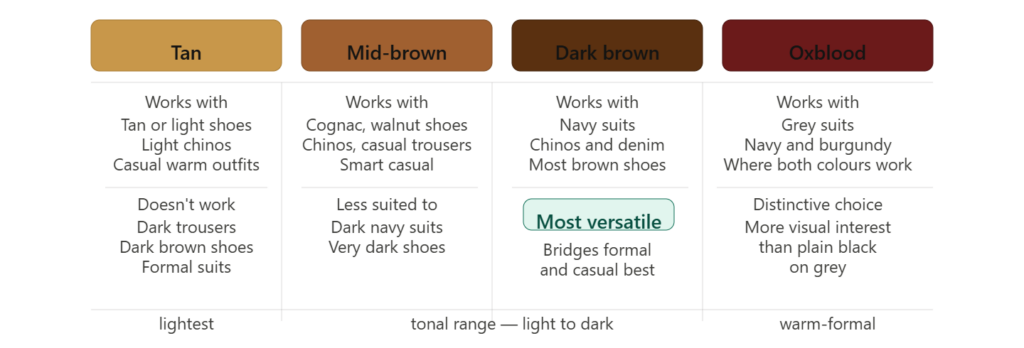
Brown is not one colour for belt matching purposes. The shade determines what the belt can and can’t match — and getting it wrong within the brown family produces a mismatch that’s subtler than brown-with-black but just as visible to anyone paying attention.
Tan and light brown (the lightest end of the range): Works with tan shoes, sand-coloured chinos, and light neutral outfits. Creates a low-contrast warm look that reads as casual and relaxed. Doesn’t work with dark trousers or formal suits — the pale belt against dark fabric creates a high contrast at the waist that breaks the vertical line rather than reinforcing it. Doesn’t work with dark brown shoes — the lightness difference within the brown family is large enough to read as a mismatch.
Mid-brown: The most direct shade for medium brown shoes — cognac, walnut, and similar mid-tones. Works with chinos in olive, stone, and tan, and with casual trousers. Bridges the gap between formal and casual better than either extreme of the brown range.
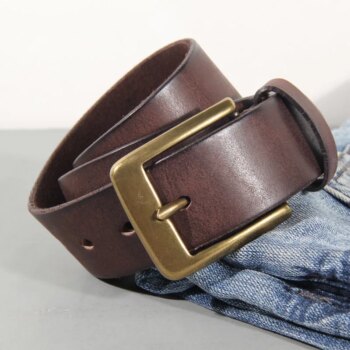
Dark brown (the most versatile): Works across the widest range of outfits — navy suits, business casual chinos, denim, and smart casual. The reason dark brown is more versatile than tan is that it sits at a mid-dark lightness value that harmonises with a wide range of trouser tones without creating the high-contrast break that tan produces against dark fabrics. Dark brown with dark navy reads as an intentional warm-cool contrast. Tan with dark navy reads as a construction error.
Oxblood and burgundy: A distinct category within the warm leather family. Oxblood belts work where both brown and black would be appropriate — they’re formal enough for suits, warm enough to work with brown accessories, and distinctive enough to register as a deliberate choice rather than a default. Specifically suits grey suits, where both black and brown are technically correct but oxblood provides more visual interest without looking inappropriate.
Black trousers: Black belt. Match the trouser and you match the shoe — most black trouser outfits use black shoes or dark leather. The only exception is a deliberate contrast look where brown leather accessories are the visual interest point of the outfit, which requires everything else to support that contrast intentionally.
Grey suit: Black belt with black shoes is the safe choice. Dark brown or oxblood with brown shoes works for less formal business and smart casual contexts. The grey suit is one of the most neutral canvases in menswear — it accepts both warm and cool accessories. The shoe determines the belt.
Navy suit: Dark brown or mid-brown with tan or brown shoes. Black with black shoes. Navy and brown have a natural tonal harmony — the warm-cool contrast is deliberate and recognised as a coherent combination. Navy and black is also correct when the shoe is black, but produces a cooler, more formal result.
Denim: Mid-brown or dark brown. Denim is a casual fabric that sits better with warm leather tones than with black, which can make the outfit look mismatched in formality — overdressed hardware on underdressed fabric. Brown leather in the mid-to-dark range matches denim’s casual register without looking deliberately rugged.
Black shirt, dark trousers: Black belt continues the monochromatic structure. If the shoes are black — which they usually are with a black shirt in smart casual or evening contexts — the belt matches both shirt and shoes and the outfit has a clean vertical consistency.
Black shirt, brown shoes: This is the outfit combination that generates the most questions. The correct answer is brown belt matching the shoes, even though the shirt is black. The shoe anchor rule takes priority — the eye travels to the shoes as the lowest point of the outfit, and the belt-shoe mismatch registers more strongly than the shirt-belt mismatch. Dark brown belt is the right shade — it bridges the contrast between black shirt and brown shoe better than tan.
Correct belt colour is necessary but not sufficient. A belt that rolls at the front — because the leather is too thin or bonded construction has begun to delaminate — creates a visible distortion at the waist that the eye registers before it registers the colour. The matching logic assumes a belt that sits flat and holds its shape. A belt that doesn’t hold its shape undermines the colour decision regardless of how correct the shade is.
The same applies to buckle finish. A brushed silver buckle that has chipped to reveal brass-toned base metal is no longer the colour it was purchased as. A gold-tone buckle that has oxidised to a patchy yellow-brown is no longer working within the warm metal family it was chosen to represent. Buckle finish integrity is part of colour consistency — a buckle that changes colour under daily wear breaks the matching logic from a different angle.
The practical standard for a belt that holds its colour contribution to an outfit over time:
Leather: Full-grain at 4mm minimum. The dense fibre structure of full-grain resists deformation — the strap keeps a flat profile through years of daily wear. Below this threshold or in bonded construction, the strap deforms within months and the visual contribution of the belt changes.
Buckle: Solid brass, stainless steel, or PVD-coated hardware. These finishes maintain their appearance under daily handling without chipping or oxidising. Electroplated finishes over zinc alloy change colour within 12–18 months of regular wear.
For a full breakdown of buckle finishes and which hold up under daily professional wear, see our [silver, gold and black buckle guide →]
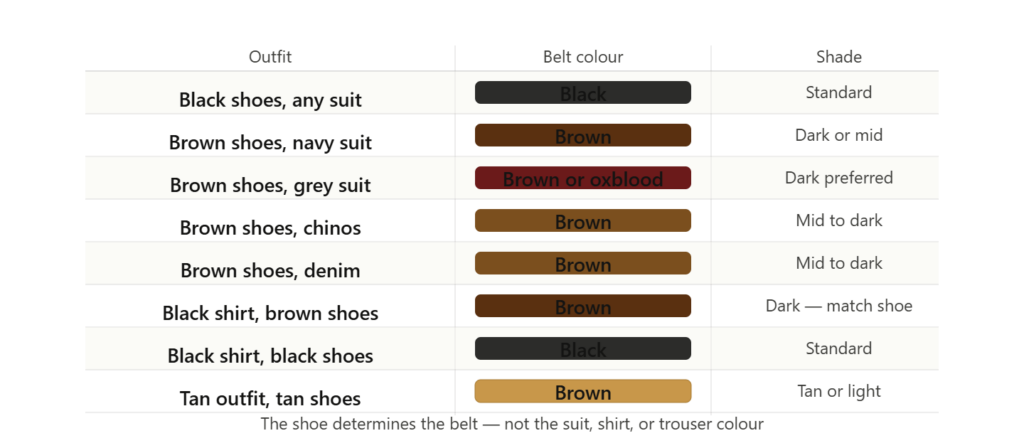
| Outfit | Belt colour | Shade |
|---|---|---|
| Black shoes, any suit | Black | Standard |
| Brown shoes, navy suit | Brown | Dark or mid |
| Brown shoes, grey suit | Brown or oxblood | Dark preferred |
| Brown shoes, chinos | Brown | Mid to dark |
| Brown shoes, denim | Brown | Mid to dark |
| Black shirt, brown shoes | Brown | Dark |
| Black shirt, black shoes | Black | Standard |
| Tan outfit, tan shoes | Brown | Light or tan |
Single belt that covers the most ground: Dark brown, 32–38mm, brushed or matte finish. Works across navy, grey, business casual, and casual denim. Doesn’t work with black shoes — for those occasions, a second black belt is needed. There is no genuinely universal single belt colour; dark brown is the closest approximation for mixed wardrobes.
Generally no, unless you’re wearing brown shoes — in which case you’re matching the belt to the shoes, which is correct, and the brown shoe with black suit combination is a deliberate warm-cool contrast choice. If you’re wearing black shoes with a black suit, the belt should be black. The suit colour is secondary to the shoe-belt match.
Dark brown for mixed casual and business casual wardrobes with a mix of shoe colours. Black for predominantly formal or monochromatic wardrobes. If you own one belt and wear both brown and black shoes, a reversible belt in black and dark brown is the practical solution — not a compromise but a genuine dual-use design.
Yes, in casual contexts where the outfit isn’t trying to be formal. Brown with black jeans reads as a casual warm-cool contrast in streetwear and relaxed contexts. It reads as a mismatch in smart or business casual contexts. The outfit’s register determines whether the contrast is deliberate or accidental — dress it casually and it works; dress it formally and it doesn’t.
Within reason, yes. The match doesn’t need to be identical — slight variation in tone between a dark brown belt and dark brown shoes reads as intentional and natural. A large tonal difference within the brown family — tan belt with dark brown shoes — reads as a mismatch. The practical test: if you can see the colour difference clearly at normal viewing distance, it’s too large.
Depends on the shoes. Black shoes with grey trousers takes a black belt. Brown shoes with grey trousers takes a brown belt in dark or mid shade. Grey is one of the most neutral trouser colours in the palette and accepts both warm and cool accessories — the shoe anchors the belt colour choice more than the trouser does.
HoldForm belts are specified with leather grade, thickness, and buckle finish listed on every product page — so the belt you choose today holds its colour and structure in two years.
[View black leather belts →] [View brown leather belts →] [Silver, gold and black buckle: how finish affects longevity →] [Reversible leather belts: how they work and what to check →]

[…] than developing a patina. Pick this over #6 if you want consistent hardware. Place it with our black belt or brown belt […]
Practical belt guides, sizing tips, and exclusive offers — straight to your inbox.