Most belt content tells you what looks good this season. This guide covers something more useful: what construction choices actually affect how a belt fits, wears, and holds up — and what’s changed in how those choices are being made.
Four things have shifted meaningfully in how well-built belts are being designed and specified. Each one has a functional reason behind it. This covers all four, with enough technical detail to actually evaluate a belt before you buy one.
The belt tail creates two functional problems that most buyers only notice after they’ve lived with a belt for a while.
The first is tail drift. Under a fitted jacket or close-cut knitwear, an unsecured tail shifts laterally during movement — enough to create an irregular profile at the waistline and, in some carry configurations, to disturb holster retention pressure. The second is visual break: a tail that sits outside the belt loops interrupts the clean line of the waistband across the full 360 degrees of the silhouette.
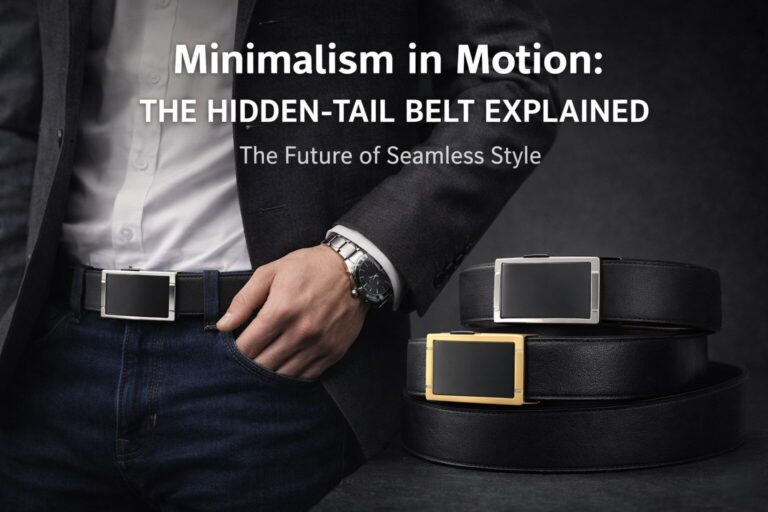
Hidden-tail designs solve both. But the mechanism varies significantly between implementations, and the construction quality of each type determines whether it actually holds.
Slot-and-tuck mechanism: The tail feeds through a slot cut directly into the belt body and seats flat against the inner face of the leather. It’s a clean, low-profile solution when executed well. The failure modes are specific: on thicker leather (4.5mm and above), the slot needs to be proportionally wider, which removes more material from the belt body at that point. If the slot edges aren’t burnished or sealed, they wick moisture, stiffen with temperature cycling, and crack under repeated flex. A raw-cut slot edge on a thick leather belt is the most common hidden-tail failure point, and it’s almost never disclosed in product descriptions.
Internal sleeve/channel mechanism: The tail is captured inside a stitched or molded channel on the inner face of the belt — the tail doesn’t pass through the belt body at all. This is more secure under dynamic load and eliminates the slot-edge stress problem entirely. The construction is more complex: it requires precise tail length calibration (too short and it won’t seat; too long and it bunches inside the channel), and the stitching holding the channel needs thread weight appropriate to the leather gauge. Undersized thread on thick leather is a long-term delamination risk.
For inside-waistband carry, the channel mechanism is the more reliable option. For dress use or lighter carry, slot-and-tuck works well when the edges are properly finished.
What to check before you buy: Look for explicit mention of slot edge treatment (burnished, heat-sealed, or edge-painted). If a brand describes a hidden-tail belt without specifying the edge finish, the edges are probably raw. Also confirm whether tail length is fixed or adjustable — fixed-length tails mean fit precision depends entirely on sizing accuracy at purchase, with no margin for error.
For a full breakdown of both mechanism types, including how they perform under different carry loads, see our [complete guide to hidden-tail belt construction →]
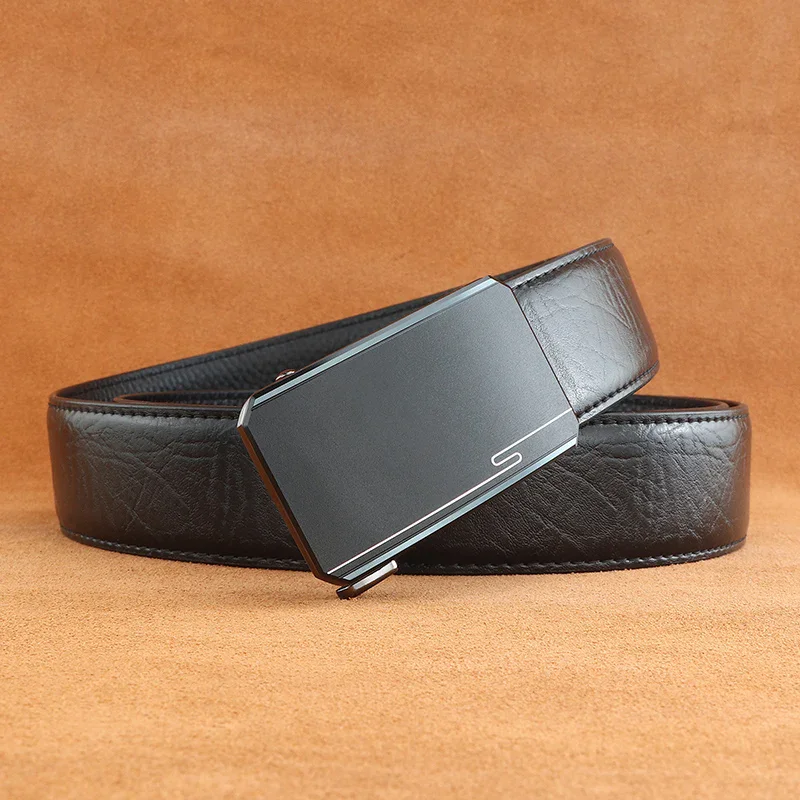
Buckle finish gets treated as a purely aesthetic decision. It isn’t. The finish type is a durability specification — it determines how the hardware wears under daily friction, how it responds to moisture and body heat, and how it looks after 12 months of daily use rather than 12 days.
Brushed (wire-drawn) finish: The surface is mechanically abraded to produce a matte, directional texture. Because the surface already has fine lines across it, micro-scratches from daily wear read as part of the texture rather than as damage. It’s a forgiving finish — one that maintains its appearance well under everyday contact. The trade-off is a slightly lower formality signal compared to high-polish.
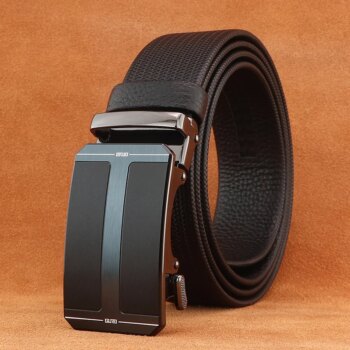
High-polish finish: A mirror surface produced by progressive polishing to fine grit. High visual formality, but the surface shows wear faster because every scratch is visible against the uniform reflective field. How well it holds up comes down to plating: standard electroplating at low micron thickness wears through at friction points within 6–12 months of daily use. PVD (physical vapor deposition) plating is significantly harder and more wear-resistant — the same finish at PVD thickness outlasts standard plating by a wide margin. Most product descriptions don’t specify which is used.
Dual-finish hardware: A brushed field with polished borders, or vice versa. This isn’t purely decorative — the polished border edge takes the highest friction load (it contacts the belt keeper and trouser waistband directly), while the brushed field sits in a relatively protected position. When the border edge wears, it reads as intentional aging rather than failure. It’s a construction approach that distributes visible wear to where it matters least.
Base metal matters more than finish: Zinc alloy is the most common base metal in mid-range hardware. It’s lightweight, casts well, and holds a finish adequately — but it’s softer than brass or steel, which means the buckle frame flexes more under load and threads wear faster at moving parts. Brass is denser and harder. For any buckle with a ratchet or automatic mechanism inside, the housing material affects not just longevity but mechanical precision — a housing that flexes under load misaligns the internal mechanism over time.
For a detailed breakdown of zinc alloy vs. brass buckle construction, including where each fails and why, see our [solid brass vs. zinc alloy buckle comparison →]
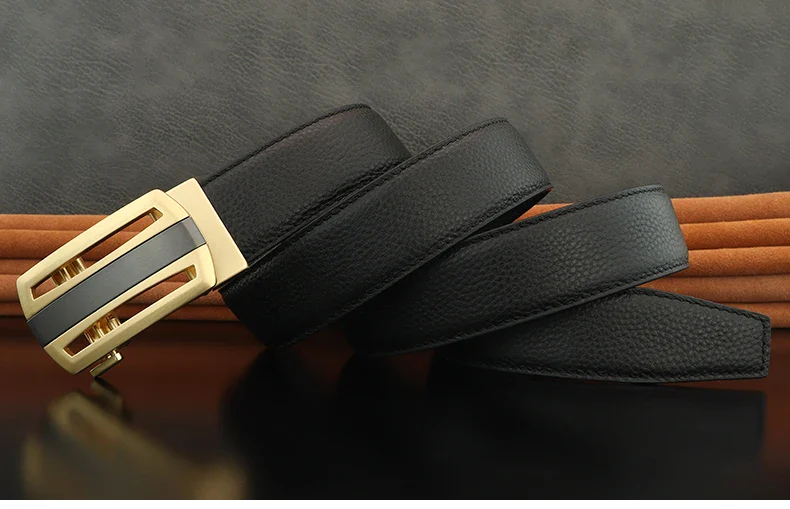
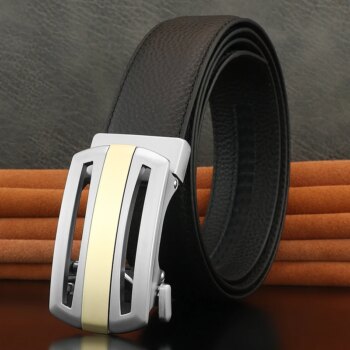
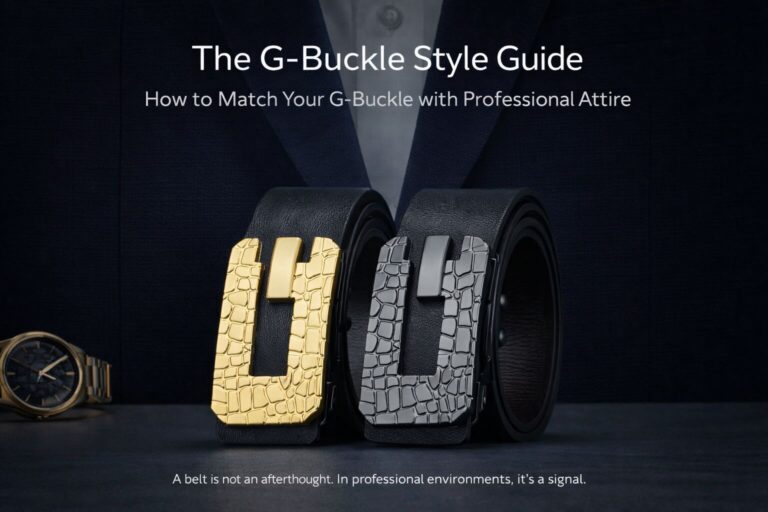
Open-frame buckle designs — letter cutouts, geometric voids, architectural negative space — have become more common as a way to signal design intention without the surface decoration of traditional logos. The geometry looks deliberate. But from a structural standpoint, frame geometry is a load-bearing decision, not just a visual one.
A solid-frame buckle distributes tension load across the full perimeter of the frame. Remove material from that perimeter — through a cutout, a letter void, or a geometric opening — and you create stress concentration zones at the vertices of the removed material. Under belt tension, those vertices carry disproportionate load.
This isn’t a disqualifying problem. For dress wear and standard daily use, open-frame buckles perform adequately even in moderate gauges. The failure cases are specific: thin-gauge zinc alloy at cutout vertices stress-cracks with repeated flex under sustained load. It’s a failure mode that shows up after months of use, not days, which is why it rarely appears in reviews.
Frame width and stiffness: A wider buckle frame has more leverage against the belt strap. A 7.5–8cm wide frame in light-gauge metal flexes more under the same belt tension than a 3.5cm frame in equivalent metal. Wider open-frame designs need heavier gauge stock to compensate — if a brand is producing large geometric buckles and keeping them light, that’s usually a gauge reduction.
What to look for: Metal gauge is rarely listed in specs. Frame weight gives you a rough proxy — a brass or steel buckle at the right gauge for its frame size will feel noticeably heavy. If a large-frame buckle feels insubstantial, the gauge is likely thin.
For technical detail on how buckle housing rigidity interacts with ratchet mechanism alignment, see our [guide to ratchet belt mechanism design →]
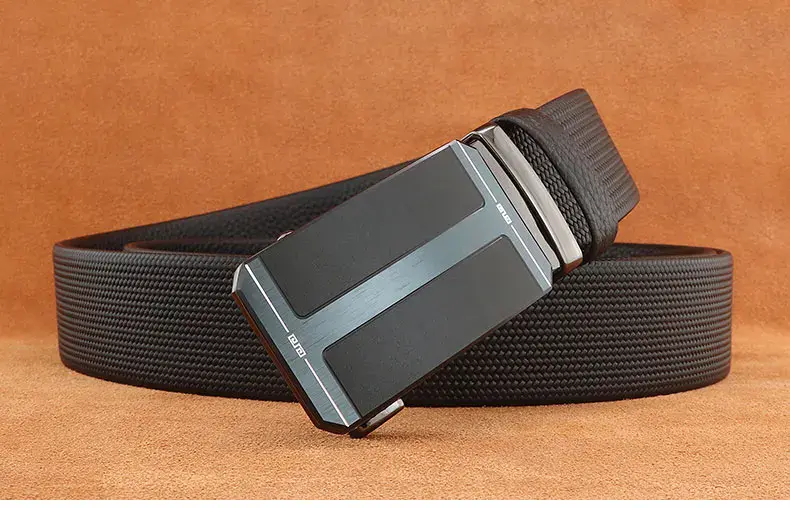
The grain of a leather belt is a surface construction indicator. It tells you which layer of the hide was used, how that layer was processed, and — when you know what to look for — how the belt will behave over years of daily wear rather than weeks.
Full-grain leather uses the outermost layer of the hide: the tightest, most densely fibered section. Because the fiber structure is intact and unmodified, full-grain leather is the most abrasion-resistant and the most breathable. It develops a patina as the surface fibers compress and pick up oils from handling — this is the aging characteristic people describe as a belt “breaking in.” It doesn’t mean the leather is wearing out; the fiber structure is becoming denser and more supple simultaneously.
Full-grain can be smooth or textured depending on how the surface is finished. A full-grain belt with a natural pebbled texture from the hide structure is different from a corrected-grain belt that has been embossed to look pebbled — even though they can appear nearly identical.
Corrected-grain leather has had the surface sanded or buffed to remove imperfections, then embossed to add texture. The embossing is often used to simulate more expensive hide textures. The surface looks consistent because it’s been made consistent — but the sanding process disrupts the tight outer fiber structure that makes full-grain durable. Corrected-grain leather is not inherently a poor material, but it’s a different material class with different wear characteristics.
What “genuine leather” means: In practice, it means the product contains leather but doesn’t specify which layer or what processing was applied. It’s a catch-all term that includes everything from full-grain hides to bonded leather — which is fiber scraps and leather dust pressed with polyurethane binder. A brand that specifies “full-grain” can be held to it. A brand that says “genuine leather” has disclosed almost nothing.
Thickness and grain interaction: A 5mm smooth full-grain belt and a 5mm corrected-grain belt of identical external dimensions will behave differently under repeated bending. The embossing process in corrected grain slightly realigns surface fibers in the compression direction of the emboss — which affects how the belt creases and how the surface holds up at the bend point near the buckle. Over time, this shows up as surface separation at the primary flex zone.
For a detailed breakdown of how leather thickness interacts with grain construction, see our [guide to belt thickness specifications →]

Translate everything above into four things to verify before you buy. A belt that won’t disclose these details upfront usually has a reason not to.
| What to Check | Why It Matters | Red Flag |
|---|---|---|
| Hidden-tail mechanism type + edge treatment | Slot-and-tuck with raw edges fails at the slot; channel mechanism with light stitching fails at the seam | “Hidden tail” with no mechanism detail |
| Buckle base metal + plating type | Brass/steel outlasts zinc under load; PVD outlasts standard electroplating by years | “Metal buckle” or “alloy hardware” with no specifics |
| Frame design + gauge | Open-frame designs need heavier gauge to maintain rigidity; large frames in light zinc fail at cutout vertices | Large geometric buckle with no weight/gauge spec |
| Leather layer + stated thickness | Full-grain single-layer has different wear properties than corrected-grain or bonded; thickness should be declared, not inferred | “Genuine leather” with no thickness or grade listed |
HoldForm publishes full construction specs for every belt — leather grade, gauge, mechanism type, and hardware material. If you’re comparing options and a spec sheet leaves any of these blank, that omission tells you something.
[View full belt products line →]
Pin buckles concentrate all stress at a single fixed hole. Over months of daily use, that hole stretches outward, and the surrounding leather either tears or compresses permanently — changing the fit. Ratchet mechanisms distribute adjustment load across multiple track engagement points, eliminating the single failure zone entirely. For a belt worn 5–7 days a week, the structural difference in lifespan is significant.
Don’t punch new holes. For ratchet belts with a removable buckle, open the clamp mechanism at the buckle end, trim the leather from that end with sharp scissors or a rotary cutter, then reattach the buckle. Trimming from the buckle end keeps the track calibration intact and ensures the tail length seats correctly in a hidden-tail mechanism. For a step-by-step walkthrough with measurements, see our [full guide to shortening a ratchet belt →]
Because declaring the grade creates accountability. A manufacturer who specifies “4.5mm single-layer full-grain veg-tanned leather” can be tested against that claim. One who says “genuine leather” cannot. The price difference reflects material cost, but also the operational discipline required to source and specify consistently — which is a different kind of cost. Brands that use lower-grade materials tend to use imprecise language because precise language would invite direct comparison.
Take your trouser waist measurement and add 2 inches (approximately 5cm). For trim-to-fit ratchet belts, order slightly larger than you think you need — you can always shorten from the buckle end, but you can’t add length. For a complete sizing guide with measurements for different carry configurations, see our [belt sizing and fit guide →]
Vegetable tanning uses plant-derived tannins and takes several weeks. The resulting leather is firmer, develops a deeper patina over time, and tends to hold its structure better under sustained load — which matters for carry use. Chrome tanning is faster (days rather than weeks) and produces a softer, more uniform leather that resists moisture better. For structured belts where stiffness under load is the primary performance criterion, veg-tan is the more appropriate material. For belts where flexibility and moisture resistance matter more, chrome-tan has advantages. Neither is inherently superior — the application determines which is the right choice.
Ask for the plating specification. PVD (physical vapor deposition) plating is significantly harder than standard electroplating and holds up under daily friction for years rather than months. If a brand can’t or won’t specify PVD vs. standard plating, assume standard. For buckles you plan to wear daily, base metal hardness matters too — brass holds a finish longer than zinc alloy at equivalent plating thickness, because the softer base material wears through from below.
HoldForm designs belts to declared specifications. Every product page lists leather grade, thickness, buckle base metal, mechanism type, and hardware finish — because a belt you’re buying to last years deserves more than a materials description that covers nothing.

Practical belt guides, sizing tips, and exclusive offers — straight to your inbox.


Leave a comment