A belt worn too tight compresses the soft tissue and muscles around the waistband, restricts natural movement at the hip, and alters the way you sit and walk. Over hours of daily wear, this mechanical compression contributes to lower back pain, hip flexor tightness, and discomfort at the iliac crest — the bony ridge of the pelvis where the waistband sits.
This is not a widely discussed cause of back pain because it is easily missed. The compression is gradual, the association between a belt and lower back pain is not intuitive, and most belt guides focus on appearance rather than biomechanics. But for anyone who wears a belt five days a week, the cumulative mechanical effect of sustained waistband compression is real and worth understanding.
The belt loops on a pair of trousers sit at approximately the level of the iliac crest — the upper rim of the pelvis. This is a structurally significant location. The iliac crest is the attachment point for several muscles involved in lower back stability and hip movement, including the quadratus lumborum, the external obliques, and the gluteus medius.
When a belt is worn correctly — at the tension needed to keep trousers in position — it sits against the body with light, even pressure. When worn too tight — which happens with pin-buckle belts when the correct tension falls between holes and the wearer chooses the tighter option — the belt compresses the soft tissue over the iliac crest and restricts the natural lateral movement of the pelvis during walking.
The hip flexors — the iliopsoas group — cross the pelvis and are affected by the position and freedom of movement of the pelvic girdle. Restricted lateral pelvic movement creates a compensatory pattern where the lumbar spine takes on more of the rotational load of walking. Over hours of daily wear and months of daily commuting, this compensation contributes to lower back fatigue and pain.
The mechanism is not injury — it is sustained low-level restriction that alters movement patterns and loads the lumbar spine asymmetrically.
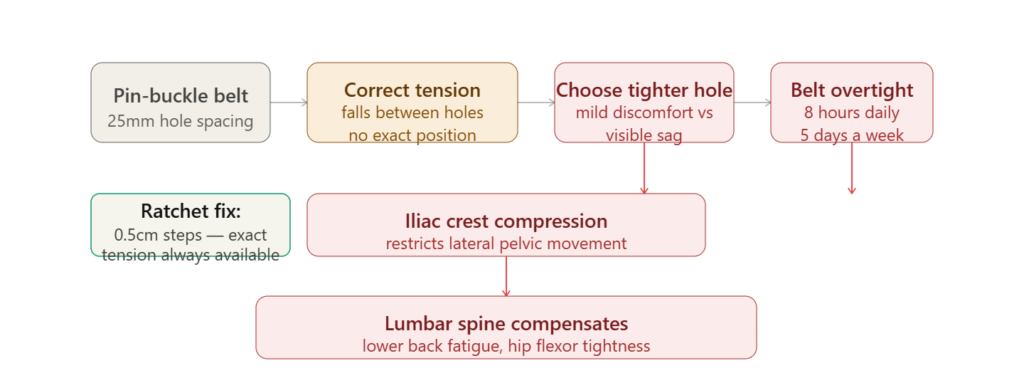
The most common cause of belt-related back pain is overtightening — wearing the belt one hole tighter than necessary because the correct tension falls between two holes.
On a standard pin-buckle belt, holes are spaced 25mm apart. Waist circumference varies by 1–3cm through a normal day — before and after meals, seated versus standing, morning versus evening. If the correct tension at a given moment falls between two holes, the options are slightly too loose (trousers may drop) or slightly too tight (belt compresses the waistband).
Most people choose slightly too tight. The discomfort of the tighter hole is immediate but mild — the discomfort of trousers sitting poorly is visible and socially uncomfortable. Over a full working day, “slightly too tight” for eight hours accumulates into genuine hip flexor restriction and lower back loading.
The practical consequence is that people with lower back pain who wear belts daily are frequently carrying a contributing factor they haven’t identified and wouldn’t intuitively associate with belt choice.
The belt specification that most directly addresses back pain from sustained wear is adjustment precision — specifically, the ability to set exact tension rather than choosing between too tight and too loose.
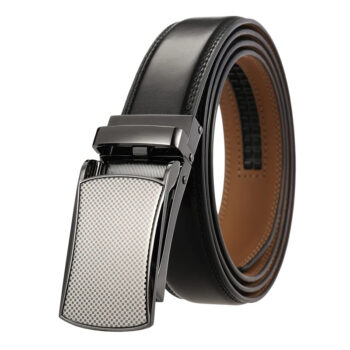
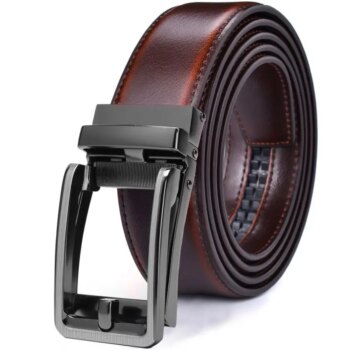
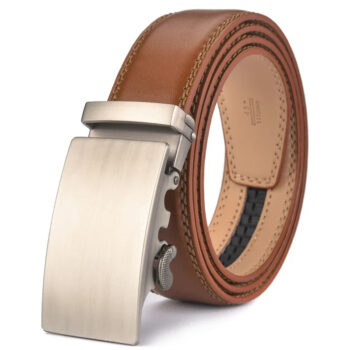
Ratchet mechanism: A ratchet belt adjusts in 0.5cm increments — 32 positions over the range where a pin-buckle belt has five. The correct tension can be set exactly for the current activity and adjusted as waist circumference changes through the day. A single click loosens the belt after a meal; a single click retightens it when standing. The belt is never worn tighter than necessary because there is always an intermediate position available.
This is the single most relevant specification for anyone experiencing belt-related lower back or hip discomfort. The mechanism change eliminates the overtightening that contributes to the problem.
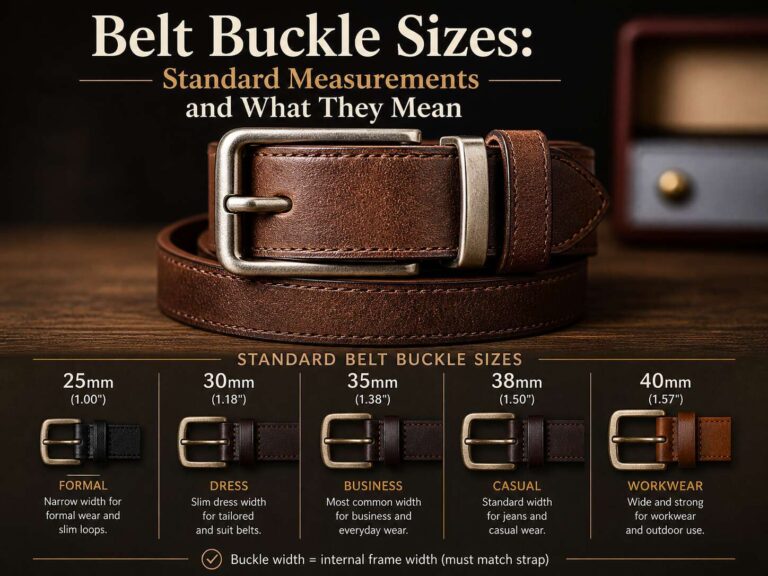
Correct belt width: A belt wider than the trouser loops has to be forced through, which creates uneven waistband pressure. A belt significantly narrower than the loops sits unevenly and migrates, producing asymmetric compression as the buckle shifts off-centre. The belt width should match the trouser loop width with 1–2mm clearance. For most trousers in the 35–40mm loop range, a 35–38mm belt is correct.
Correct tension setting: The correct belt tension is snug enough that two fingers inserted horizontally under the belt front fit with light resistance — not tight, not loose. This is the tension at which the belt holds the trousers in place without compressing the soft tissue over the iliac crest. If two fingers fit easily with no resistance, the belt is too loose. If two fingers cannot fit, it is too tight.
Leather thickness and stiffness: A belt with adequate thickness — 4mm single-layer full-grain — holds a flat profile under the lateral tension of daily waistband wear. A thin or layered belt that rolls or curls creates uneven pressure distribution around the waistline. Even, distributed pressure from a flat belt is preferable to concentrated pressure from a rolled or misaligned belt.
The problem is most significant for people who spend extended time seated at a desk. When seated, the pelvis tilts posteriorly — the lower back rounds slightly and the waistband shifts upward relative to the pelvis. A belt worn at the correct standing tension becomes effectively tighter when seated as the geometry of the pelvis changes.
This is why people who wear a belt to work and spend most of the day at a desk frequently experience the afternoon lower back stiffness and hip tightness that is characteristic of sustained compression: the belt that felt acceptable at 9am when standing is overtight by 11am after two hours of desk work.
A ratchet belt resolves this directly — loosen one click when sitting down, retighten one click when standing. The total adjustment is 0.5cm and takes less than two seconds. The belt is never overtight for the current posture.
Wrong placement: Some people wear their belt significantly below the natural trouser waist position — at the hips rather than the waist. This places the belt directly over the greater trochanter (the bony prominence on the outer thigh) and the iliotibial band attachment points. Sustained compression at this position is more directly associated with hip pain and IT band tightness than back pain. The belt should sit at the trouser waistband level — through the belt loops, not below them.
Asymmetric belt buckle position: A buckle that has migrated off-centre creates asymmetric waistband pressure — more on one side than the other. Over a full day, asymmetric compression contributes to uneven loading of the quadratus lumborum on each side. Centre the buckle and use a belt that holds its position in the loop without migrating. A belt at the correct width for the loop and correct tension holds its position throughout the day.
Too wide a belt for the loop: A belt forced through a loop that is too narrow for it creates a permanent ridge of high pressure at each loop position. The compressed leather pushes back harder than a correctly fitted belt and the contact pressure at each loop is significantly higher than along the strap between loops. If a belt is difficult to thread through the loops, it is too wide for those trousers.
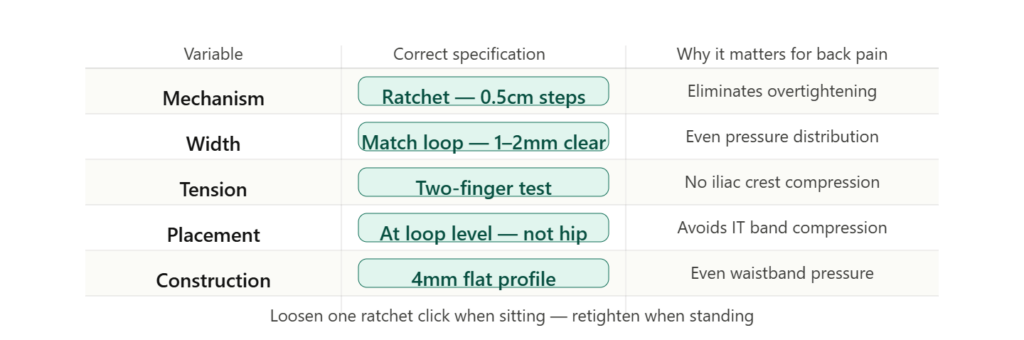
The belt specification that minimises the contribution of daily belt wear to lower back and hip discomfort:
Mechanism: Ratchet — 0.5cm increment adjustment eliminates overtightening and allows posture-appropriate tension adjustment through the day.
Width: Match to trouser loop width with 1–2mm clearance. Do not force a wider belt through narrower loops.
Tension: Set to the two-finger test — light resistance with two fingers inserted horizontally under the belt front. Adjust down one click when seated for extended periods.
Placement: At the trouser waistband through the belt loops. Not below the loops at the hip.
Construction: Single-layer leather at 4mm, flat profile. No rolling or curling that creates uneven pressure distribution.
None of these are medical interventions. They are mechanical adjustments to how a belt is worn that remove a contributing factor from the daily load on the lower back.
Yes — specifically when worn too tight or at the wrong tension for the current posture. A belt worn one hole tighter than necessary compresses soft tissue over the iliac crest and restricts natural lateral pelvic movement during walking and sitting. Over hours of daily wear, this restriction contributes to lower back fatigue and hip flexor tightness. The most common cause is the 25mm hole spacing on pin-buckle belts forcing a choice between too tight and too loose.
A ratchet belt with 0.5cm increment adjustment. The precise adjustment allows the belt to be set at exactly the correct tension for the current activity and posture — standing, seated, post-meal — without the overtightening that accumulates from choosing the tighter of two hole options on a pin-buckle belt.
Two fingers inserted horizontally under the belt front should fit with light resistance. This is the tension at which the belt holds the trousers correctly without compressing soft tissue over the pelvis. If two fingers cannot fit, loosen the belt. Adjust down one increment when sitting for extended periods and retighten when standing.
Yes. A belt worn too tight compresses the soft tissue over the iliac crest and can restrict the lateral pelvic movement involved in normal walking. Compression at the hip level — below the trouser waistband at the greater trochanter — more directly affects the iliotibial band and outer hip musculature. The belt should sit at the trouser waistband level through the belt loops, not below it.
Indirectly. A belt significantly wider than the trouser loops creates high-pressure ridges at each loop position. A belt significantly narrower than the loops migrates and creates asymmetric pressure as the buckle shifts off-centre. A belt matched to the loop width with 1–2mm clearance distributes pressure evenly around the waistband.
If you are experiencing significant or persistent back pain, consult a physiotherapist or doctor. The information in this article addresses mechanical factors in daily belt wear and is not a substitute for professional medical assessment.
HoldForm ratchet belts adjust in 0.5cm increments — the precise tension control that eliminates the overtightening that contributes to belt-related lower back discomfort.
[What is a ratchet belt: how it works and who it suits →] [How tight should a belt be: setting correct tension →] [Ratchet belt vs traditional belt: mechanism comparison →] [Best belt for standing all day →]

Practical belt guides, sizing tips, and exclusive offers — straight to your inbox.

Leave a comment