The surface finish of a leather belt — smooth grain versus embossed or pebble texture — affects how the belt reads in professional and formal contexts. It’s not a question of which is better. They serve different functions and suit different environments. Getting this wrong doesn’t ruin an outfit, but getting it right is the kind of detail that makes an outfit look considered rather than assembled.
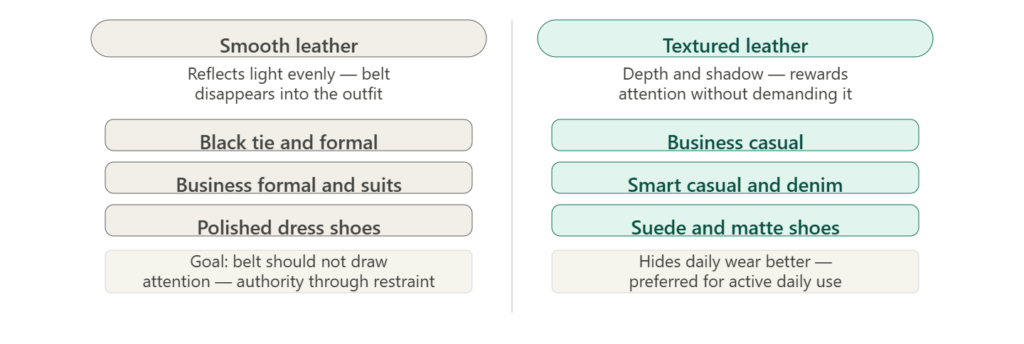
Leather surface finish is a texture signal — it operates the same way that shoe finish, fabric weight, and hardware choice operate. Smooth surfaces read as formal and restrained. Textured surfaces read as considered and intentional.
Smooth leather reflects light evenly across the strap surface. At a glance, it reads as a uniform material — the belt registers as part of the outfit structure rather than a distinct element within it. For formal and business formal contexts, this is exactly the right behaviour. The belt should not be the most interesting thing about the outfit.
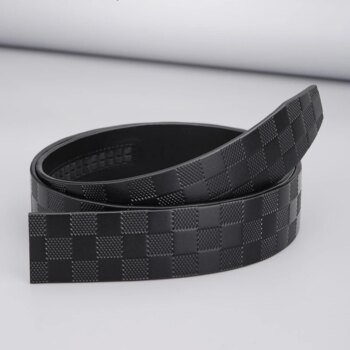
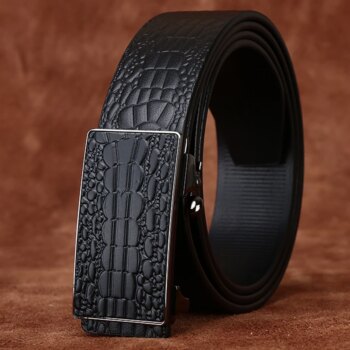
Textured leather — embossed crocodile, pebble grain, saffiano, stone pattern — creates depth and shadow across the strap surface. Up close it reveals detail; at normal viewing distance it reads as a refined matte finish with more visual interest than smooth leather. The texture rewards attention rather than demanding it.
Neither finish is inherently more formal or more casual. Context determines which is appropriate.
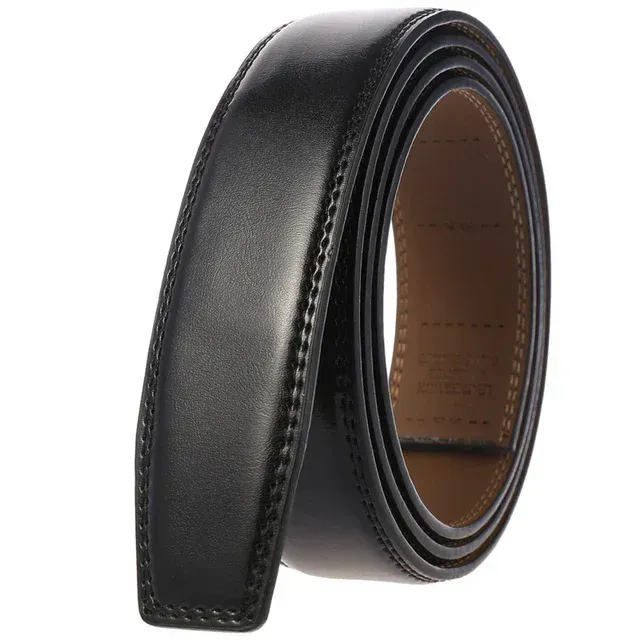
Formal and black tie: Smooth leather is the only appropriate finish for black tie and formal event wear. The surface consistency aligns with the uniform, high-polish aesthetic of formal dress. An embossed belt at a black tie event reads as a misalignment in register — not offensive, but not correct.
Business formal and suits: Smooth leather is the default correct choice for a suit in boardroom, client-facing, and executive contexts. It completes the formal structure of a suit without introducing a variable that draws attention. This matters most when the goal is to project authority and restraint — contexts where the professional content of the meeting or presentation should carry more weight than the wearer’s accessories.
Polished dress shoes: Smooth belt leather pairs correctly with polished leather shoes. The surface consistency between the belt and shoe leather creates a coherent leather family within the outfit. A textured belt with mirror-polished Oxfords introduces a surface mismatch that breaks this coherence.
When to use smooth leather:
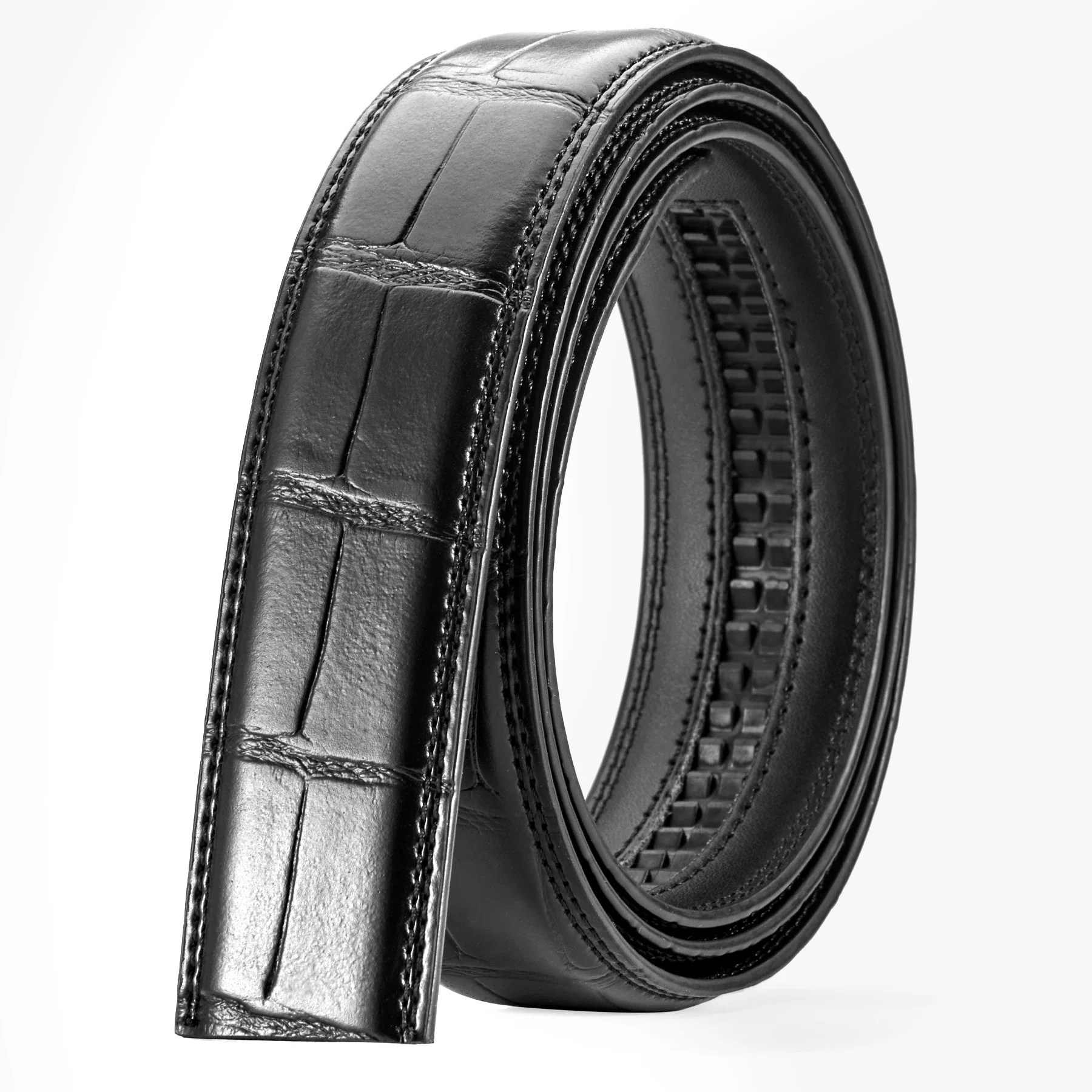
Business casual: Textured leather is well suited to business casual contexts — chinos, blazers, loafers — where the outfit has more visual flexibility than a suit. The texture adds material interest without disrupting the professional register of the outfit. Pebble grain or fine emboss in this context reads as intentional detail rather than casual informality.
Smart casual and dressed denim: Dark selvedge or indigo denim with a blazer or structured knitwear suits a textured belt. The texture of the belt provides visual coherence with the denim’s own surface character rather than the mismatch a smooth formal belt would create in a casual denim context.
Suede and matte shoes: Textured leather pairs more naturally with suede and matte-finish shoes than smooth leather does. The shared surface register — both matte, both with visible texture — creates coherence between the two leather accessories in the outfit.
Longevity under daily wear: Embossed texture hides minor scuffs, surface wear, and light scratches more effectively than smooth leather because the pattern breaks up the surface visually. A smooth belt shows wear at scuff points as a visible bright mark against the uniform surface. A textured belt absorbs the same wear into the pattern without creating a visible contrast. For a belt worn in physically active or mixed-wear daily contexts, texture extends the period before visible wear becomes noticeable.
When to use textured leather:

The relevant coordination rule between belt and shoes is surface register, not surface type. The goal is that the belt and shoe leather occupy the same finish family — not that they share the same exact texture.
Polished shoe + smooth belt: Correct. Both are high-surface-consistency finishes.
Polished shoe + textured belt: Generally avoid. The mismatch between the mirror finish of the shoe and the textured belt surface reads as unresolved.
Matte or suede shoe + smooth belt: Acceptable but not ideal. The smooth belt reads slightly formal against a casual shoe surface. In smart casual contexts it works; in casual denim contexts it can look like the belt belongs to a different outfit.
Matte or suede shoe + textured belt: Correct. Both are matte-finish materials with surface character. The belt and shoe read as part of the same tonal family.
The exception: fine emboss patterns — crocodile, saffiano, stone — at formal viewing distance read as a matte refinement rather than a casual texture. These can work in moderately formal contexts where a bold pebble grain cannot. The scale of the texture determines how formal it reads. Fine emboss is more formal than bold pebble grain.
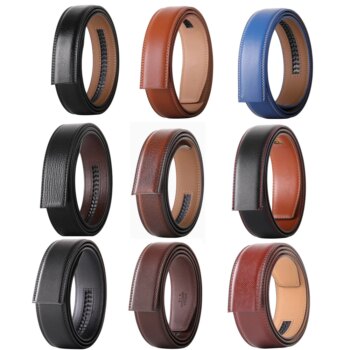
Smooth leather and colour: Smooth leather in dark colours — black, dark brown, oxblood — reads as highly formal. The uniform surface amplifies the colour’s depth. Smooth leather in lighter colours — tan, cognac — reads as smart casual at best. The combination of a light colour and smooth surface doesn’t have enough visual weight for formal contexts.
Textured leather and colour: Texture provides enough visual weight that a wider range of colours remain professional. A pebble grain tan belt reads more formally than a smooth tan belt because the texture adds material presence. Dark colours in textured leather — dark brown, navy, black — work in business casual. Lighter colours in textured leather suit smart casual and casual denim wear.
| Context | Correct surface | Shoe finish | Reasoning |
|---|---|---|---|
| Black tie / formal | Smooth only | Polished | Register consistency |
| Business formal suits | Smooth | Polished | Belt should not draw attention |
| Business casual | Either — textured preferred | Matte or polished | More outfit flexibility |
| Smart casual | Textured | Matte, suede | Surface coherence |
| Denim and casual | Textured | Casual leather, suede | Texture matches denim character |
| Daily wear for longevity | Textured | Any | Hides wear more effectively |
Smooth leather requires more attention to surface maintenance than textured leather. Scuffs on smooth leather are visible as bright marks against the uniform surface. A soft cloth and periodic application of leather conditioner maintains the surface consistency. Shoe polish in a matching colour can blend minor scuffs on smooth leather if the belt is full-grain — avoid on corrected or coated leather, which will react differently.
Textured leather requires less surface maintenance in daily wear because the pattern absorbs and hides minor surface damage. Conditioning is still important for the leather’s structural health — the flex resistance and fold durability that full-grain construction provides — but surface appearance is more forgiving. The emboss pattern itself does not require specific maintenance.
For both: conditioning every 3–6 months with a quality leather cream maintains fibre flexibility and prevents the fold cracking at the buckle that accumulates on unconditioned leather regardless of surface finish.
For the full conditioning process, see our [leather belt care guide →]
Depends on the office. In business formal environments — law firms, executive offices, client-facing finance roles — smooth leather is the safer choice. In business casual and creative professional environments, textured leather is appropriate and increasingly common. Pebble grain and fine emboss in dark colours specifically read as professional rather than casual. Bold Western-style tooling or very bright emboss patterns are casual regardless of colour.
The relevant variable is surface register, not texture match. Smooth shoes suit smooth belts. Matte and suede shoes suit textured belts. An exact texture match between belt and shoe leather — both in crocodile emboss, for example — is not required and can look overcoordinated. Same surface family, not identical surface.
For visible surface condition: textured leather maintains a better appearance longer because the pattern absorbs and hides surface wear. For structural longevity: leather grade and thickness are the determining factors, not surface finish. A smooth full-grain belt at 4mm will outlast a textured split leather belt at the same thickness regardless of surface. Surface finish affects visible appearance under wear — construction determines structural life.
Fine emboss patterns — subtle crocodile, saffiano — work with business casual suits in less formal environments. For traditional business formal, boardroom, or high-stakes professional contexts, smooth leather is the correct choice. The rule is not absolute — context and office culture determine where the line sits.
Yes. Minor scuffs, surface marks, and light scratches are absorbed into the emboss pattern on textured leather and are far less visible than on smooth leather, where they create a visible bright mark against the uniform surface. For a belt worn in active daily contexts, textured leather maintains its appearance significantly longer between conditioning treatments.
HoldForm belt straps are available in smooth and textured finishes in both ratchet and pin-buckle configurations. Leather grade and strap thickness are listed on every product page.
[View smooth leather belt range →] [View textured leather belt range →] [Black belt or brown belt: the full colour matching guide →] [What belt to wear with a suit: colour, width and finish →] [Leather belt care guide: conditioning and maintenance →]

Practical belt guides, sizing tips, and exclusive offers — straight to your inbox.


Leave a comment