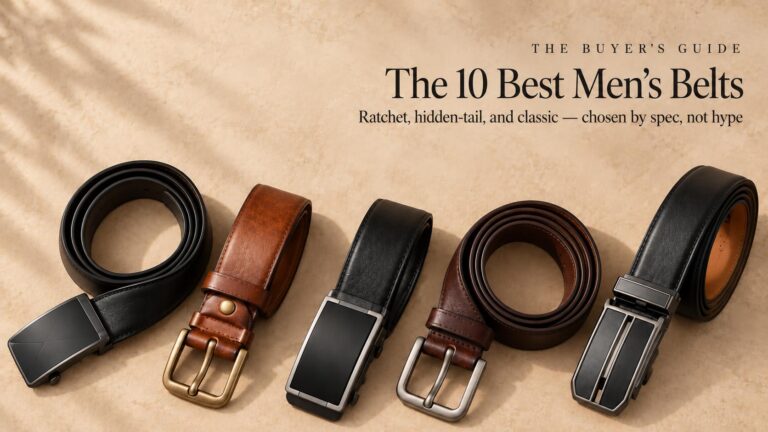
Most “best belt” lists rank belts the writer never touched. This one is the ten we actually build and sell most — each with its declared spec so you compare on facts, not adjectives. Sorted by what each is best for. New to belt construction? Start with our guide to...
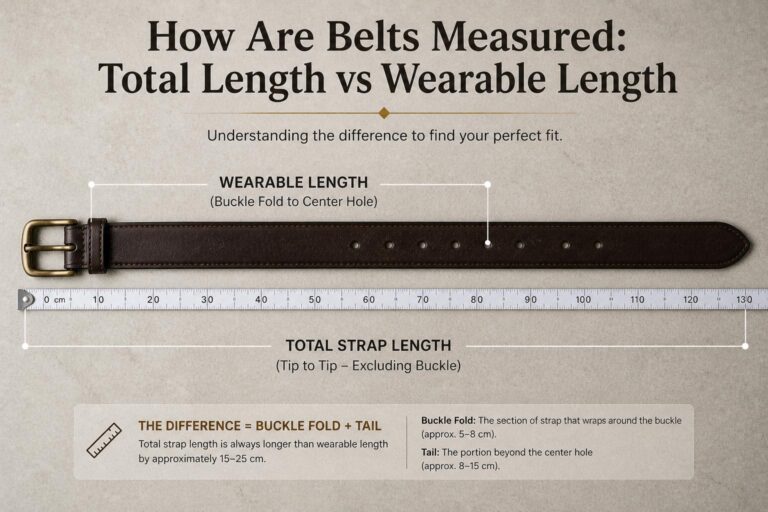
Belt measurements create confusion at purchase because manufacturers use two different systems — sometimes on the same page. A belt listed as “100cm” and a belt listed as “size 36” may both fit the same person, or they may not, depending on which measurement system each is using. Understanding the...
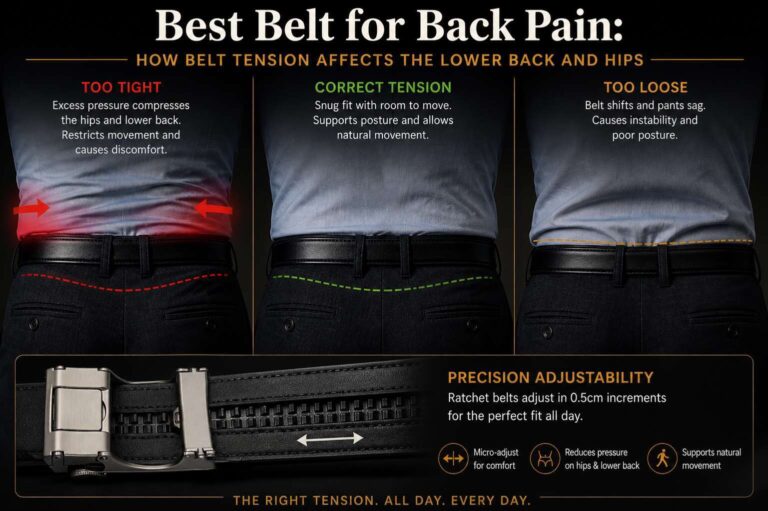
A belt worn too tight compresses the soft tissue and muscles around the waistband, restricts natural movement at the hip, and alters the way you sit and walk. Over hours of daily wear, this mechanical compression contributes to lower back pain, hip flexor tightness, and discomfort at the iliac crest...
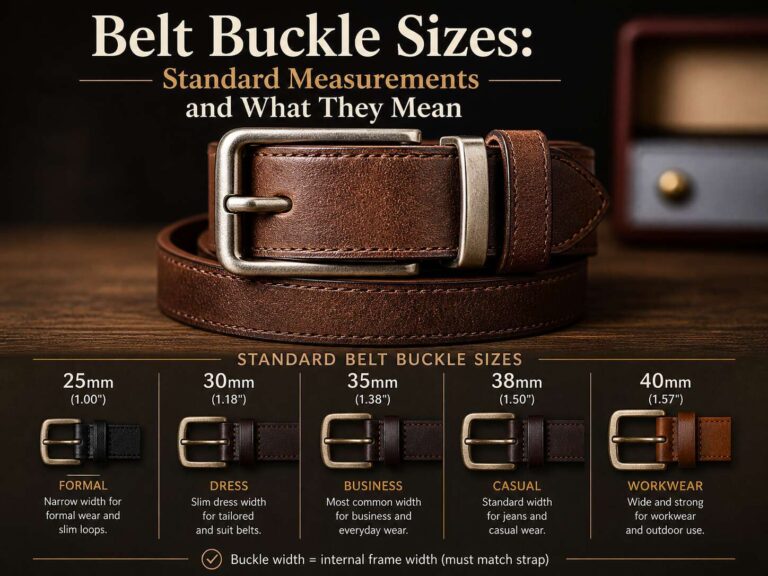
Belt buckle size refers to the internal width of the buckle frame — the measurement that must match the strap width for the two to work together. A buckle listed as 38mm is designed to accept a 38mm strap. A 35mm buckle will not correctly fit a 38mm strap, and...
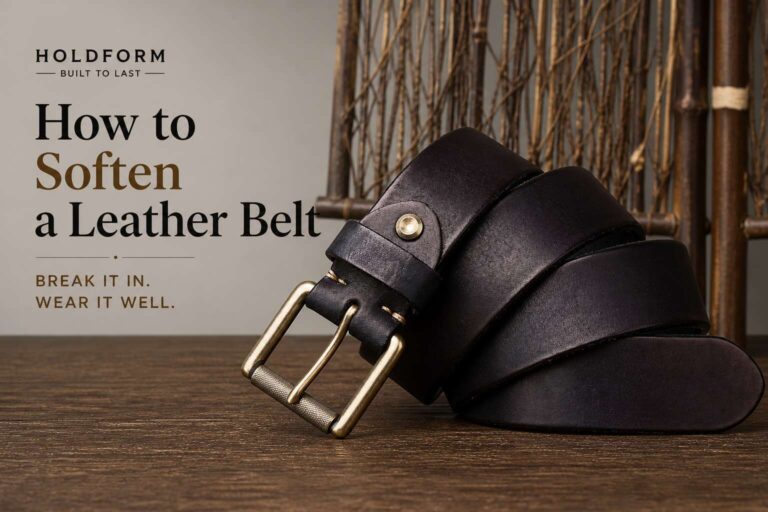
A new full-grain leather belt is stiff. This is not a defect — it is the correct starting condition for quality leather. The dense collagen fibre structure of full-grain hide at 4mm has enough tensile strength and bending stiffness to hold a flat profile under daily waistband tension for years....
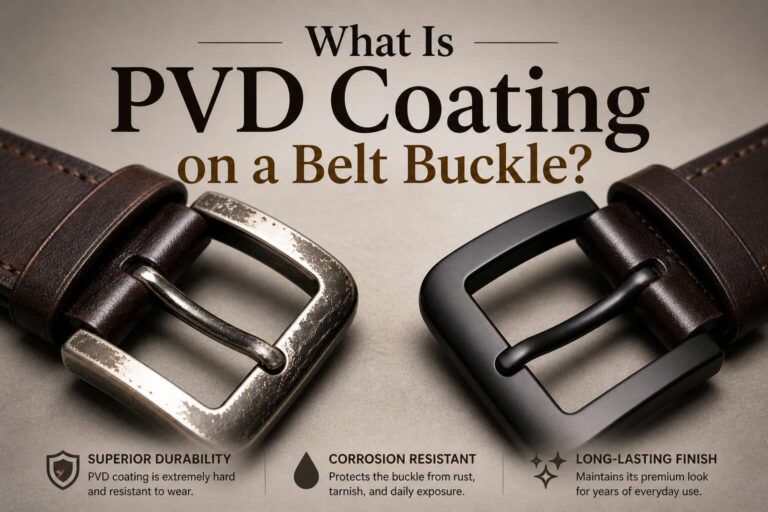
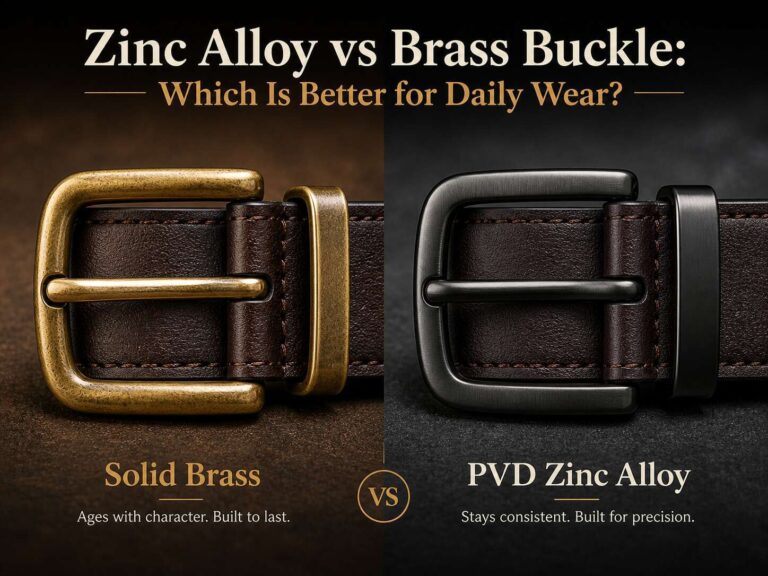
PVD coating — Physical Vapor Deposition — is a surface finishing process that bonds a hard, thin layer of material onto a metal substrate at the atomic level. On belt buckles, it is used to apply a durable, consistent finish to zinc alloy hardware that holds its appearance under sustained...
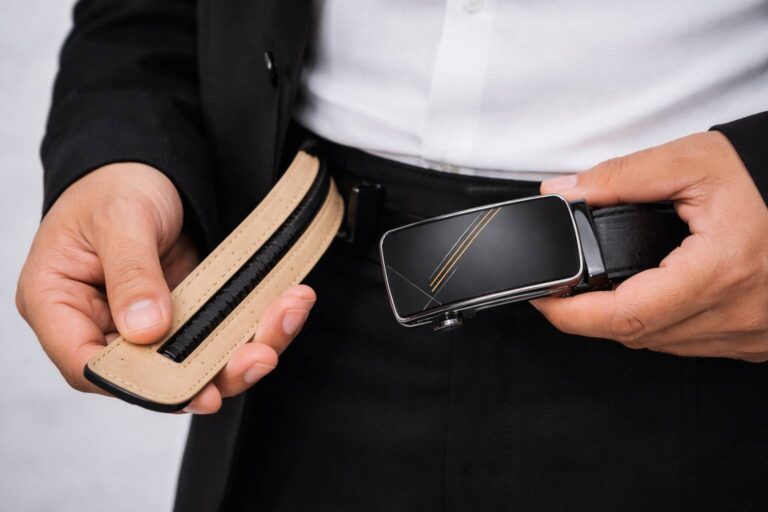
Yes — if your belt uses a removable attachment system. No — if the buckle is stitched, woven, or riveted to the strap. The distinction is visible in under 10 seconds and determines whether your belt is repairable or disposable. How to Tell in 10 Seconds Turn the belt over...
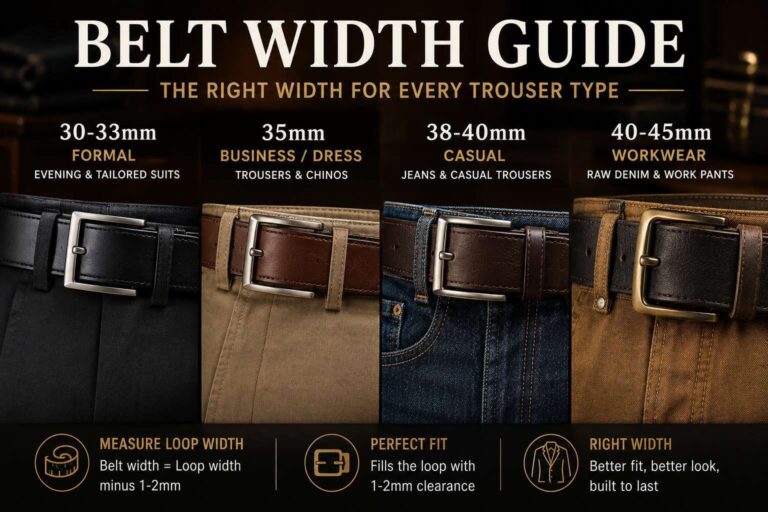
Belt width is not a style preference. It is a fit specification set by the loop width of the trousers you are wearing. When the belt is too wide, it stresses the loop. When it is too narrow, it moves inside the loop and pulls the buckle off-center. The correct...
Zinc alloy and brass are the two most common belt buckle materials. They are not interchangeable — each suits a different belt type, a different aesthetic, and a different longevity profile. The right choice depends on which belt you are buying and what you expect from the hardware over years...
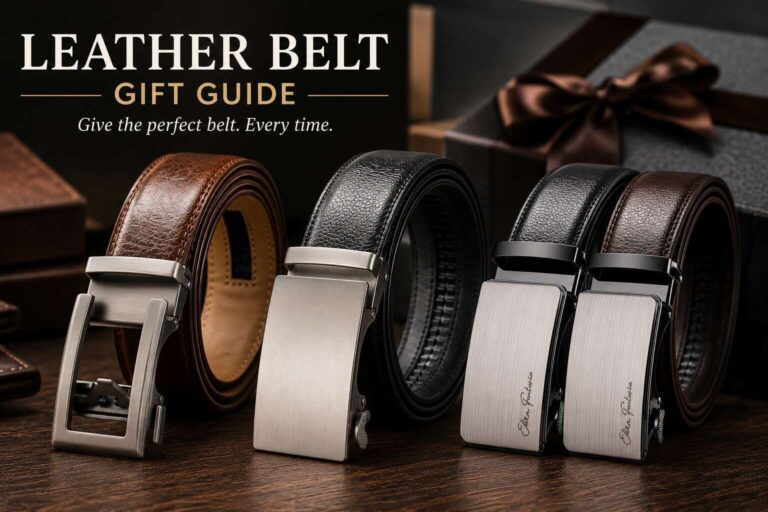
A leather belt is a good gift only when the sizing problem is solved. Traditional pin-buckle belts make that difficult — fixed hole spacing means the belt either fits or it doesn’t. Trim-to-fit belts remove the guesswork entirely: the recipient cuts to their exact length before first wear. Order 120–125cm,...
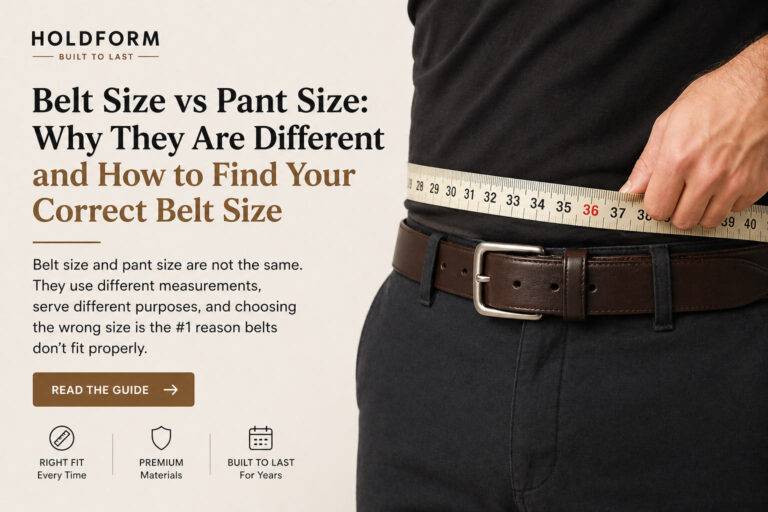
Belt size and pant size are not the same measurement. They use different reference points, different measurement conventions, and often produce different numbers even on the same body. Using your trouser size to order a belt is the most common reason belts don’t fit correctly on arrival. This explains why...
IPSC (International Practical Shooting Confederation) competition places a specific mechanical demand on a belt that standard belts — including most tactical belts — cannot meet: the belt must maintain absolute horizontal rigidity under the combined outward load of a holster, magazine pouches, and ancillary equipment attached to the outer face....
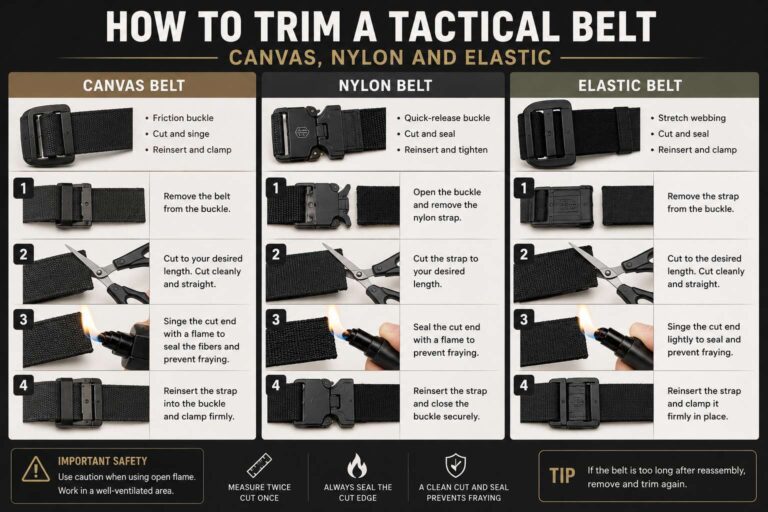
Tactical belts — canvas, nylon, and elastic — are sold in universal lengths of 120–160cm. Almost every buyer needs to trim them. The process is simple but differs by material: leather trimming (covered in the ratchet belt resizing guide →) uses scissors only. Canvas and nylon require one additional step:...
Tactical belts span a wide range of materials and use cases — from rigid 1100D nylon gun belts for IPSC competition to lightweight metal-free elastic belts for airport travel. The term “tactical” covers both functional performance choices and aesthetic preferences. This guide covers the HoldForm tactical range, the construction differences...
Choosing the correct belt size is a two-step process: measure your waist at the position where the belt will be worn, then match that measurement to the correct belt size or strap length depending on whether you are buying a pin-buckle or ratchet belt. The two systems use different sizing...
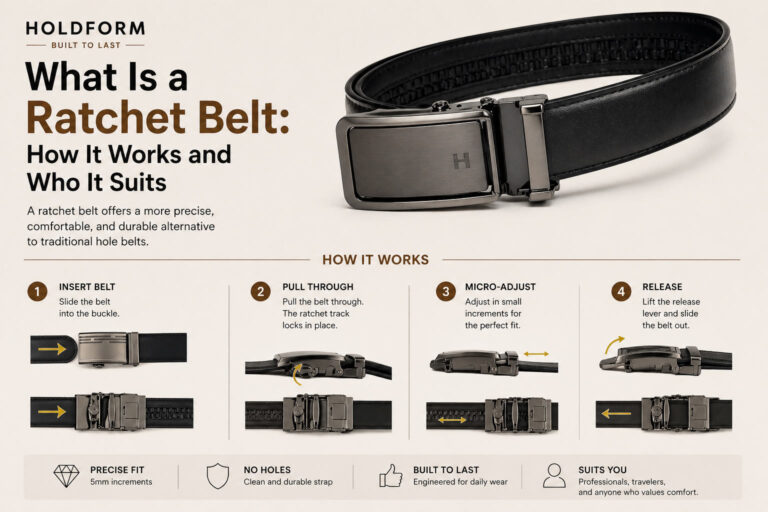
A ratchet belt is a leather belt that adjusts using a toothed track rather than punched holes. Instead of a pin passing through a fixed hole, a spring-loaded mechanism inside the buckle locks onto the track at any position along its length. The result is a belt that can be...
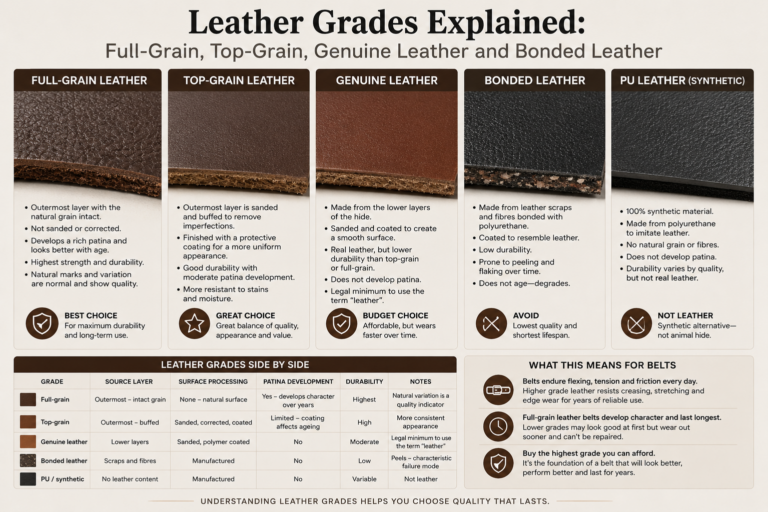
Most leather products are labelled “genuine leather” — which sounds reassuring but describes the lowest quality grade that can legally call itself leather. Understanding what the label actually means, and what the alternatives are, takes about five minutes and changes how you evaluate any leather purchase. There are four grades...
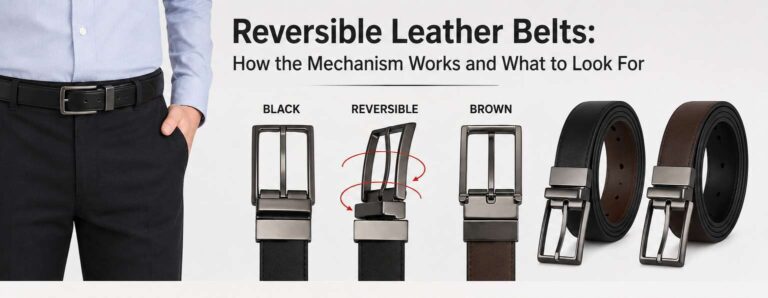
A reversible belt solves one specific problem: carrying two colour options in a single belt. For travel, minimalist wardrobes, or anyone who moves between black-shoe and brown-shoe outfits without wanting to manage two separate belts, it’s a genuinely practical design. The mechanism that makes it work is simple — but...
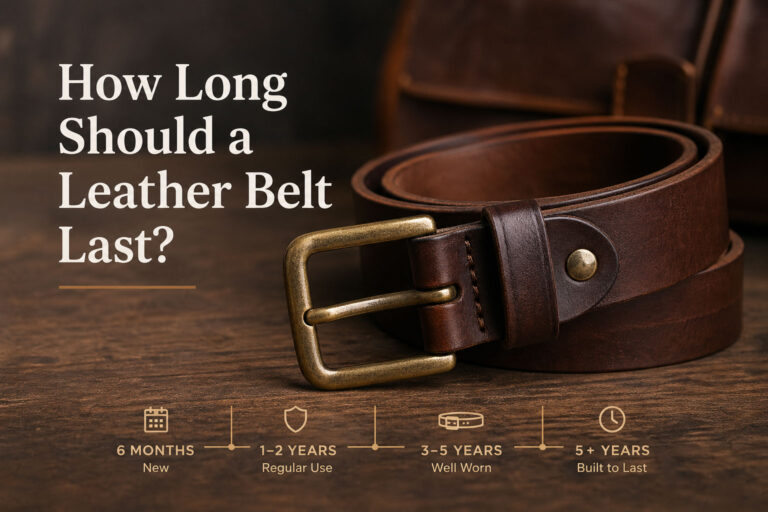
A correctly specified full-grain leather belt at 4mm thickness with solid or PVD-coated hardware, worn daily and conditioned every 3–6 months, should last 8–12 years before the leather reaches end of life. The buckle will typically outlast the strap by years. Most leather belts fail significantly before this timeline. The...
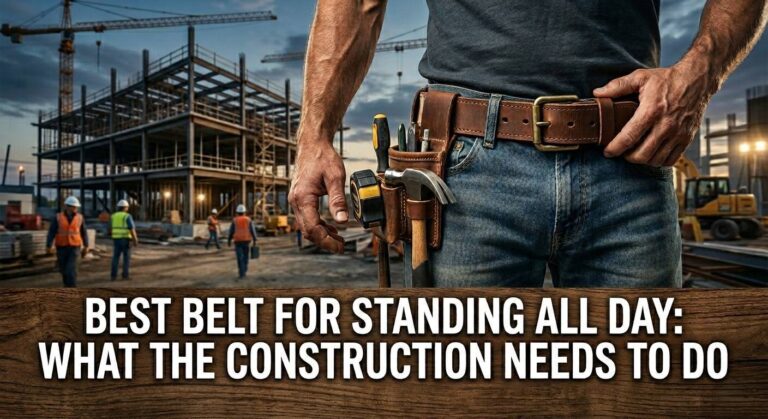
A belt worn for eight to ten hours of standing and movement fails in ways that a desk-based belt doesn’t. The load is different, the wear pattern is different, and the construction variables that determine comfort over a full standing day are specific enough that they’re worth understanding before buying....
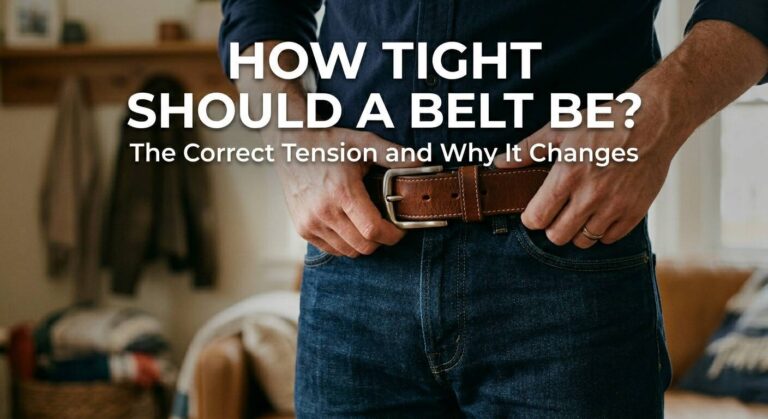
Most belt advice on this topic says “tight enough to hold your trousers but not so tight it’s uncomfortable.” That’s not an answer — it’s a restatement of the question. The correct belt tension has a specific mechanical definition, it changes between activities, and getting it wrong in either direction...
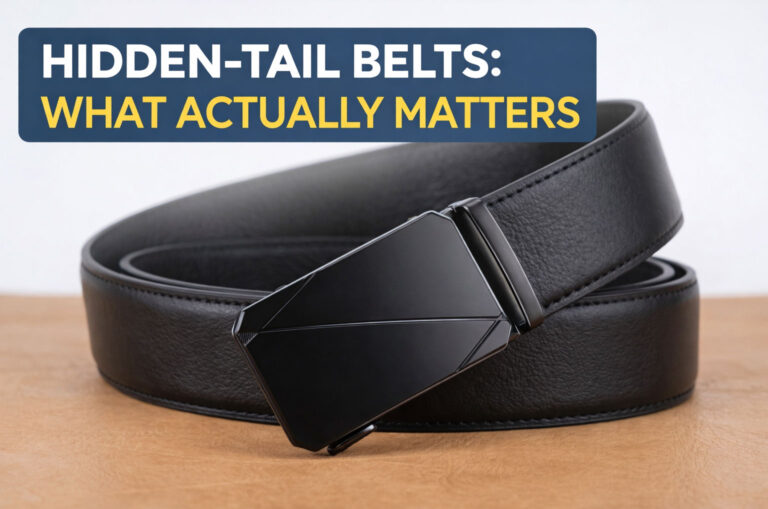
The hidden-tail design gets described in most product listings as a style feature. It isn’t — or at least, that’s the wrong frame for understanding what it does and why it was developed. A hidden-tail belt solves a specific mechanical problem: belt tail movement under load. When a tail isn’t...
A ratchet belt looks simple from the outside. You feed the strap through the buckle, it clicks into place, you press a lever to release it. Most people stop there. The mechanics underneath that process — and the specific ways they fail — are what separate a ratchet belt that...
Belt thickness is listed as a spec on some product pages and absent from most. When it does appear, it’s rarely explained — you get the number without the context that makes it useful. This covers what the difference between 4mm and 5mm actually means in mechanical terms: how each...
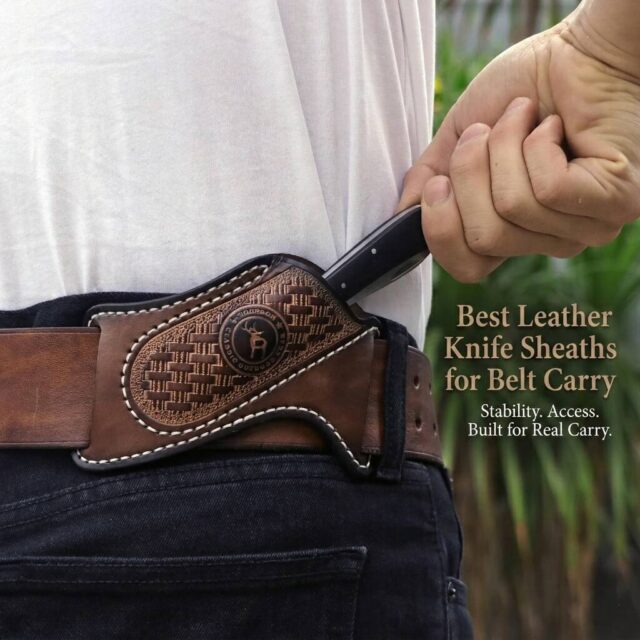
A knife sheath has one mechanical job: hold the knife in a fixed position on the belt, at a consistent angle, with enough retention that the knife doesn’t move during carry but releases cleanly on draw. Most sheath content skips the construction entirely and goes straight to product recommendations. This...
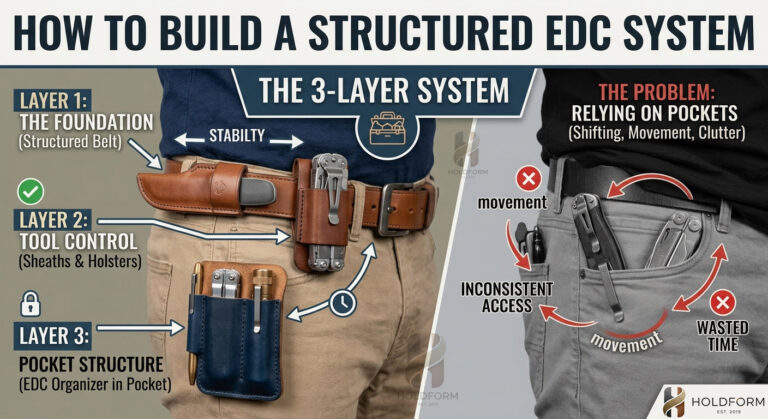
A belt holster solves a specific problem that pocket carry doesn’t: tools that are large, heavy, or used repeatedly throughout the day work better at a fixed, accessible position on the belt than loose in a pocket where they shift, stack against other items, and require hunting to retrieve. The...
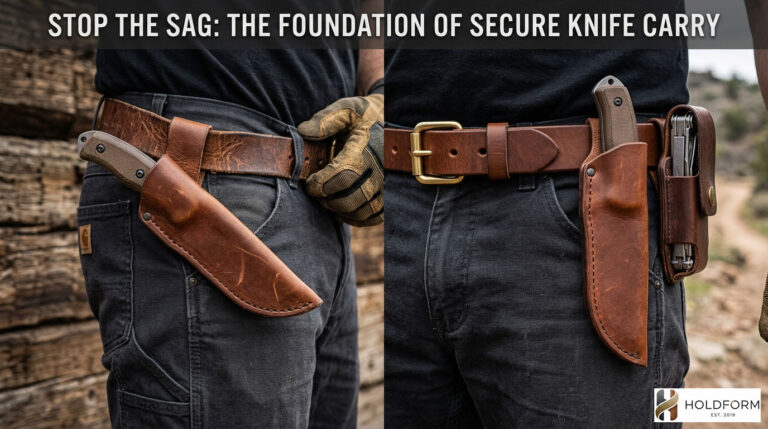
Knife carry problems are almost never knife problems. If your knife tilts outward during the day, drops lower than you positioned it, or creates pressure after an hour of wear — the sheath is rarely the cause. The sheath holds the knife. The belt holds the sheath. When the system...
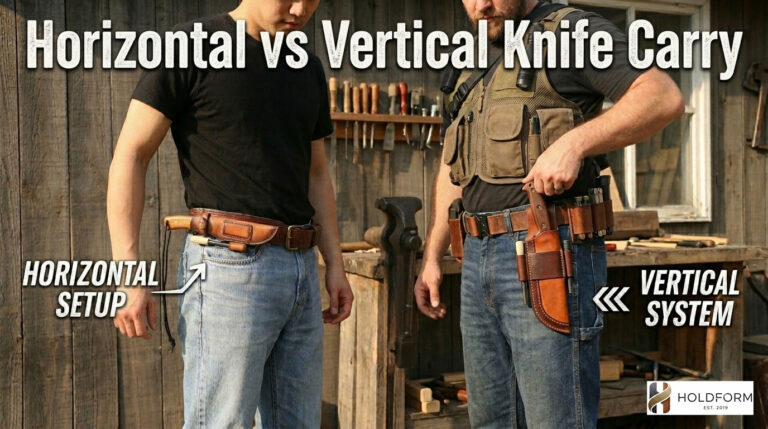
The horizontal versus vertical knife carry debate gets framed as a personal preference question. It isn’t — or at least, preference isn’t where the decision should start. Each orientation produces a different mechanical relationship between the knife, the sheath, and the belt. That relationship determines seated comfort, draw mechanics, carry...
Most knife carry problems are diagnosed as sheath problems or knife problems. They’re almost never either. A knife that tilts, shifts, or creates pressure after an hour of wear is failing at the system level — not the component level. The sheath might be well-made. The knife might be exactly...
Most EDC setups aren’t systems. They’re collections. A knife in a pocket. A multitool clipped somewhere. Keys loose. Phone wherever. Each item carried independently, each one competing for the same space, each one requiring a separate decision every time it’s accessed. The result is carry that works in theory and...
Practical belt guides, sizing tips, and exclusive offers — straight to your inbox.